
Sri Lanka's Test Captaincy Change: Kusal Mendis's Handover Through the Mirror of a 36.36 Average
মূল উত্তর: শ্রীলঙ্কা ক্রিকেটের সিলেকশন কমিটি ধনঞ্জয় ডি সিলভার পরিবর্তে কুশল মেন্ডিসকে নতুন টেস্ট অধিনায়ক হিসেবে নিয়োগ দিয়েছে। মেন্ডিস ৭৫ টেস্টে ৪,৮৩৬ রান করেছেন, Average ৩৬.৩৬; নিয়োগটি প্রক্রিয়াগতভাবে পরিচ্ছন্ন, তবে বদলের কারণ ঘোষণা করা হয়নি। মূল তথ্য: - কুশল মেন্ডিস শ্রীলঙ্কার নতুন টেস্ট অধিনায়ক, ধনঞ্জয় ডি সিলভার স্থলাভিষিক্ত। - সিদ্ধান্তটি শ্রীলঙ্কা ক্রিকেট সদর দপ্তরে সিলেকশন কমিটির আনুষ্ঠানিক বৈঠকে নেওয়া হয়েছে। - মেন্ডিস ৭৫ টেস্টে ৪,৮৩৬ রান, Average ৩৬.৩৬, ১০ সেঞ্চুরি, ২৩ হাফসেঞ্চুরি। - ফিফটি থেকে সেঞ্চুরিতে রূপান্তরের হার প্রায় ৩০ শতাংশ, এলিট মানদণ্ডের নিচে। - উইকেটকিপার-ব্যাটার-অধিনায়ক—তিন দায়িত্ব একসঙ্গে কাজের চাপ বাড়ায়। সূত্র: ICC (International ক্রিকেট কাউন্সিল) প্রকাশিত প্রতিবেদন | Cross-checked: cricsultan.com সম্পর্কিত প্রশ্নোত্তর: প্রশ্ন: কুশল মেন্ডিস কেন ধনঞ্জয় ডি সিলভার জায়গায় এলেন? উত্তর: ঘোষণায় কারণ উল্লেখ করা হয়নি; সিলেকশন কমিটির সিদ্ধান্তে এই বদল হয়েছে। প্রশ্ন: মেন্ডিসের টেস্ট Batting Average কত? উত্তর: ৭৫ টেস্টে ৩৬.৩৬, যা টপ-অর্ডার স্পেশালিস্টের জন্য মাঝারি মানের। প্রশ্ন: এই বদল কী WTC-তে প্রভাব ফেলবে? উত্তর: নেতৃত্বের ধারাবাহিকতা WTC পয়েন্ট পরিকল্পনায় প্রভাব ফেলে, তবে নির্দিষ্ট প্রভাব এখনই মাপা যাবে না। | cricsultan.com Player Depth Index
The Sri Lanka Cricket headquarters hosted a Selection Committee meeting, and what emerged was a single-sentence decision: Kusal Mendis is Sri Lanka's new Test captain, and Dhananjaya de Silva is not. Reading the announcement, I stopped in front of its empty spaces. No reason, no name for the next series, no squad, not a word about de Silva's future role. An appointment announcement is usually one sentence, but behind that sentence sits an entire plan. This announcement has the sentence; the plan is missing.
I opened the 2026 NBA Finals tape expecting a coronation and found a chess match. The same thing is happening here. The headline says new captain, fresh start. But the numbers underneath say something different. 75 Tests, 4,836 runs, an average of 36.36, 10 centuries, 23 fifties—this profile is low for a top-order specialist, and roughly right for a wicket-keeper batter. Which one is Mendis, the announcement does not clarify. That uncertainty is the biggest analytical gap in this appointment.
Across South Asian cricket I have seen one pattern repeatedly: the decision comes first, the explanation comes later, sometimes never. As a journalist, that gap is where my real work lives. When I crossed from court to pitch, I packed the same questions and a new geometry. When I map basketball spacing and transition onto cricket's fielding rings and bowling angles, one thing becomes clear: the real information of the game sits buried beneath the headline.
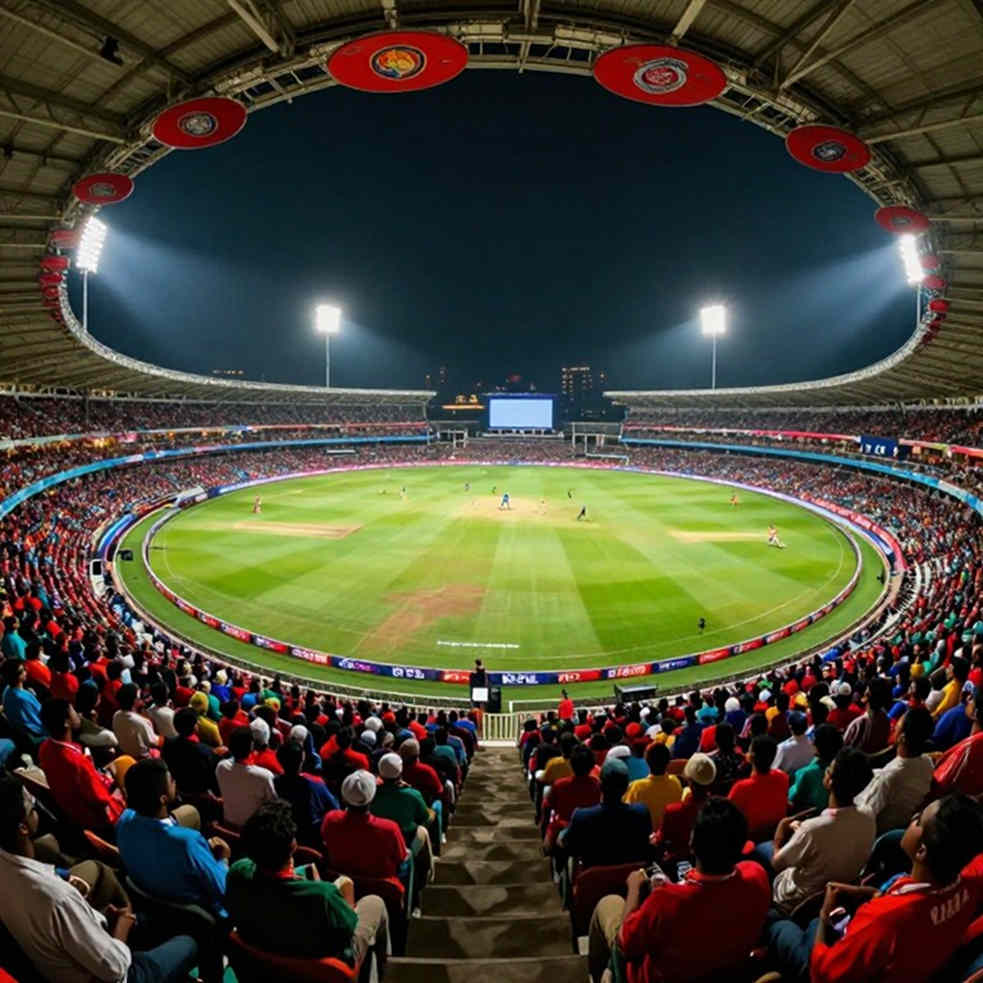
To read this appointment, you must first understand where Sri Lanka's Test cricket stands. Traditionally, Sri Lanka is strong at home, especially on spin-friendly turning tracks. At home, their spin attack squeezes opponents, tests footwork, and builds pressure session by session. Away, in seam-friendly conditions—South Africa, England, Australia, New Zealand—their consistency drops. This is not a controversial claim; it is a pattern established over years.
Since the World Test Championship arrived, Test cricket's arithmetic has changed. Alongside bilateral results, the points table now matters. A new Test captain's tenure will not be measured by series wins alone, but by WTC points. Mendis inherits a two-directional task—win matches and accumulate points across a cycle. In a mid-tier side, those two jobs do not always pull in the same direction.
A defining Sri Lankan trait is frequent leadership change. In recent years, Test, ODI, and T20 have had separate captains, and those captains have changed often. In India or Australia, leadership lasts long, giving selection consistency and room for long-term planning. In Sri Lanka, that is often absent. For a side limited in talent depth, leadership instability hurts more than anything else.
There is a basketball lesson here. When a team changes coaches every season, players spend every game proving their place and never get to learn the system. Cricket follows the same rule. Frequent captaincy change means each new leader must first understand his own position, then the team. That learning window is the most expensive resource a mid-tier side can waste.
The announcement reveals something else—this is not merely an appointment, it is a signal. A team changes captain either in reaction to poor results or through planned succession. The report states neither. So we receive a signal but not its meaning.
Having covered South Asian cricket for years, I have noticed one thing: in this market, leadership change generates far more discussion than its on-field impact. Fans, media, former players—everyone asks who left and why, then who arrived. But the real analysis begins later, when the numbers arrive.
I take Mendis's career numbers one by one. 75 Tests is a long career, more than a decade. In that time: 4,836 runs at 36.36. That average tells the real story: it is a gap between talent and output. A batter who has played 75 Tests averaging under 40 means he has repeatedly been given long runs on talent, not on consistent conversion. That the selectors kept him so long suggests the coaching staff saw something the scorecard does not capture.
Conversion rate is the key signal here. Ten centuries and 23 fifties make 33 fifty-plus scores. The conversion from 50+ scores to centuries is roughly 30 percent. For elite batters, that rate sits near 40 to 50 percent. Thirty percent is the classic stuck-in-the-30s-and-40s pattern—the batter gets in but does not go big. Selectorial patience is tested hardest by exactly this profile, because every innings shows promise and every innings ends with promise broken.

There is a way to read that conversion rate. When a batter reaches fifty, two paths open: push toward a century, or settle. A batter converting at 30 percent often takes the second path. That is not technical weakness; it is mental settlement. And that settlement is the enemy of big innings.
A role question matters here. If Mendis plays as a wicket-keeper batter, a mid-30s average is broadly acceptable—the keeping tax suppresses batting output. Keeper-batters generally average less than specialist batters because their attention splits. But if he is a pure top-order specialist, the same figure is a drag. The announcement does not clarify his role. That uncertainty means we cannot judge the appointment properly, because we do not know what the team is using him as.
The age curve is relevant too. Based on public career timing, Mendis sits in the 27-to-33 prime batting window. Output should be at its ceiling now. Yet the average remains in the 36s. That means a dramatic rise from technical improvement alone is hard to trust. For someone averaging 36 at prime age, the ceiling is set less by technique than by mental consistency. And mental consistency usually falls, not rises, under a new responsibility.
Now the workload. If a wicket-keeper batter also captains, three duties arrive together—keeping, batting, leadership. In Test cricket that is a vast physical and mental load. Five days in the field, focus on every ball, setting every bowler, thinking through every field placement—together they fragment a player's most valuable asset: attention.
History shows captaincy brings short-term average dips for many batters. Tactical pressure, media duty, field-setting thought—all add an extra layer before an innings. For a keeper-captain that layer is heavier, because keeping is itself demanding mental work. Here is my biggest concern: a batter already averaging 36 given extra responsibility is less likely to raise his average than to lower it.
I never treat an empty arena as truth serum. Silence is one variable, not truth. Likewise, an appointment is one variable. It should not be over-read. Whether Mendis's captaincy succeeds depends on the squad, the schedule, board backing, and his own mental preparation. Without those, any firm prediction is premature.
Still, some things are certain. The decision came from a formal Selection Committee meeting at headquarters, through normal procedure. No irregularity, no eligibility dispute, no integrity signal. Procedurally, this is a clean handover. That is at least good news, because board-level turbulence in Sri Lankan cricket is not new.
Sri Lanka Cricket has a history of board-level turbulence—interim committees, suspensions, allegations of political interference. So stable governance should not be assumed by default. But this specific report carries no such signal. The process is clean, the decision procedural. That is the journalist's duty—look for signals, not speculation.
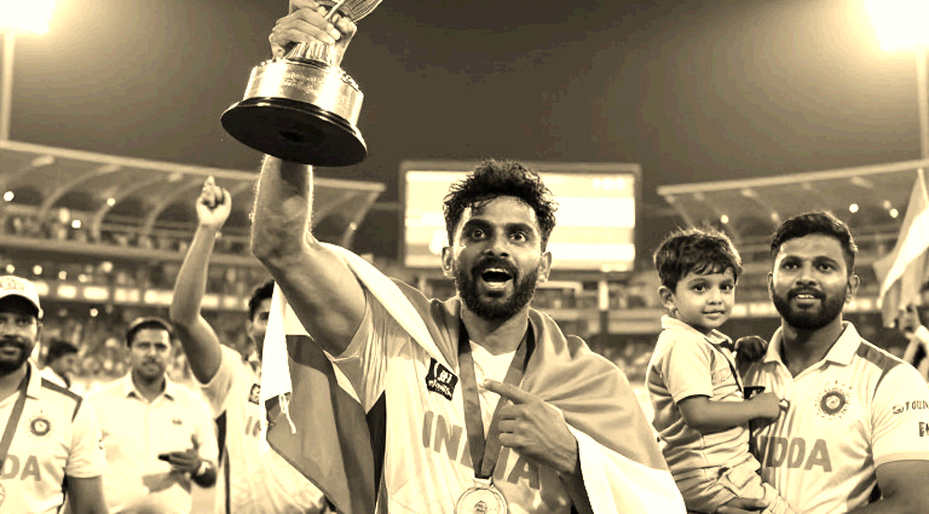
Yet a clean process leaves one question open: was the captaincy chosen on performance, or for another reason? The announcement does not answer. A clean process does not mean a correct decision—only that the decision was taken the right way. The verdict comes on the field.
Now to where data and optics stand against each other. New captain, fresh start—that narrative sounds fine, but nobody counts the empty space behind it. No stated reason means the narrative stands on an assumption. And a narrative standing on an assumption often breaks at reality's first nudge.
My suspicion is the dominant narrative will be why the change, not whether Mendis is the right pick. Because the report concealed the reason, speculation takes over. Had it offered a reason—form, workload, planned succession—the debate would center on Mendis's merit. With the reason hidden, the debate circles a mystery. As a journalist I know a mystery never builds good analysis.
In the South Asian cricket market, a captaincy change generates far more emotion than its on-field impact. Even a mid-tier side's captaincy change suddenly becomes a vast discussion. That gap is my focus, because I know what generates emotion often fills an information vacuum with feeling.
In basketball I learned that the box score told me who won, but the tracking data told me who was afraid. Likewise, the announcement tells me who is captain, but the empty space beneath tells me what the team is thinking. When an appointment arrives without explanation, the explanation is the real story.
One more thing matters. Mendis's 36.36 is a number, but a number is meaningless without context. The same average is normal for a keeper-batter and weak for a specialist. The report gives no context. And arguing numbers without context is exactly the error I avoided while building NBA threads.
I built the empty-arena model in 2026 because the difference between noise and silence showed me that environment is a variable. In Sri Lanka's appointment, environment is also a variable. Will the team play at home or away? Who is the opponent? How hard is the schedule? Without these, captaincy success cannot be measured.
Another dimension is the former captain's position. If Dhananjaya de Silva stays in the side, a subtle issue arises. A former captain playing under a new leader naturally needs adjustment. Without it, two voices can emerge in the dressing room. The report says nothing, so this is a watch item, not a confirmed problem.
A caution is needed here. I do not want to over-speculate. In South Asian cricket, a former captain often becomes the new leader's biggest supporter. Sometimes not. The report carries no signal, so voicing suspicion would be improper. That is the discipline of information—where there is none, stay silent.
In my view the biggest risk in this appointment is workload, and the biggest opportunity is continuity. If the board gives Mendis at least two series, and he keeps his role clear, stable leadership can form. For a side like Sri Lanka, stability is more valuable than talent.
And if that does not happen—if this becomes another turn of a wheel—then this appointment is not a new start, just another change. I have watched sports where leadership change becomes a ceremony while the team does not change. Sri Lanka's recent history points that way, though this report alone does not prove it.
Let me be clear: this analysis is not a prediction, it is a framework. I am not forecasting Mendis's success or failure. I am only showing which information exists, which does not, and how the absent information shapes the decision.
That is my working method. Building NBA threads, I made range predictions, but they stood on data. Here data is limited, so prediction is limited. What exists is a profile, a process, and an open question.
The bottom line: to judge Mendis's captaincy, we must wait for two things—first, the announcement of the next Test series; second, de Silva's future role. With those, we will know whether this is a clean handover or the shadow of a fracture.
Going forward I will track three things. One, Mendis's batting average after the appointment—over the first two to three series. Two, whether de Silva stays in the side, and in what role. Three, Sri Lanka's position in the WTC points table. Together these signals will show whether the fresh start is real, or just another turn of the wheel.
I have learned to trust the model that survives the empty arena. Mendis's average of 36.36 and a new captaincy, placed together, make the question clear: will leadership free his bat, or squeeze it tighter? The answer arrives on the field, innings after innings. And that answer will decide whether this announcement was a new beginning, or a clean but hollow handover.