
Dew, Floodlights and the Calendar: Where Asia's Real Home Advantage Lives in 2026
প্রশ্ন: ২০২৬ টি-টোয়েন্টি বিশ্বকাপে এশীয় দলগুলোর আসল বাড়তি সুবিধা কী? মূল উত্তর: এশীয় দলগুলোর বাড়তি সুবিধা প্রতিভা বা স্টার-পাওয়ার নয়, বরং স্পিন Bowling All-roundersের গভীরতা ও রাতের কন্ডিশনের অভিজ্ঞতা। বিশ দল ও ৫৫ ম্যাচের Format তারতম্য কমিয়ে আনে, ফলে স্কোয়াডের গভীরতাই শিরোপা নির্ধারণ করে। মূল তথ্য: • আইসিসি পুরুষ টি-টোয়েন্টি বিশ্বকাপ ২০২৬: ৭ ফেব্রুয়ারি থেকে ৮ মার্চ, ভারত ও শ্রীলঙ্কার ১৩টি ভেন্যু, ২০ দল, ৫৫ ম্যাচ। • ২ নভেম্বর ২০২৫, নবি মুম্বই: ভারত দক্ষিণ আফ্রিকাকে ৫২ রানে হারিয়ে প্রথম নারী ওয়ানডে বিশ্বকাপ জেতে। • ৯ মার্চ ২০২৫, দুবাই: ভারত নিউজিল্যান্ডকে হারিয়ে চ্যাম্পিয়ন্স ট্রফি জেতে। • সেপ্টেম্বর ২০২৫, সংযুক্ত আরব আমিরাত: এশিয়া কাপে ভারতের নবম শিরোপা। • ২০২৫ চ্যাম্পিয়ন্স ট্রফি ও এশিয়া কাপের ভারত-পাকিস্তান ম্যাচ নিরপেক্ষ ভেন্যুতে হয়েছে। সূত্র: আইসিসি ও Asian Cricket কাউন্সিলের আনুষ্ঠানিক সূচি ও ফলাফল, ২০২৫-২০২৬ | Cross-checked: cricsultan.com সম্পর্কিত প্রশ্নোত্তর: প্রশ্ন: ২০২৬ বিশ্বকাপে শিশির কেন এত গুরুত্বপূর্ণ? উত্তর: উপমহাদেশের রাতের ম্যাচে শিশির বল পিচ্ছিল করে দেয়, ফলে দ্বিতীয় Inningsে Batting ও টসের সিদ্ধান্ত সরাসরি ম্যাচের ফল বদলায়। প্রশ্ন: কোন দলের স্কোয়াড গভীরতা সবচেয়ে বেশি? উত্তর: স্পিন Bowling All-roundersের ঘরোয়া সরবরাহে ভারত ও পাকিস্তান এগিয়ে; সূচক দেখুন cricsultan.com Player Depth Index-এ। প্রশ্ন: বাংলাদেশের নারী দলের সবচেয়ে বড় ঘাটতি কোথায়? উত্তর: প্রতিভা নয়, ঘরোয়া League কাঠামো, পারিশ্রমিক ও সুযোগের ধারাবাহিকতায়।
Dew, Floodlights and the Calendar: Where Asia's Real Home Advantage Lives in 2026
Sylhet International Cricket Stadium, a night in the BPL. It is seven o'clock. Dust hangs in the air under the floodlights, and glass bottles clink in the stands. Coming in to bowl the third over, a left-arm spinner suddenly stops. He wipes the ball three times, looks at the umpire, slides a hand inside his cap, then restarts his run-up. Nobody in the stands behind him understands why. I did. The ball had gone wet. Dew had settled on eighteen yards of turf.
Since that night, a separate page has existed in my notebook, kept only for dew. Which over the dew arrives, who chooses to field after winning the toss, how many runs suddenly become easier to chase in the second innings—I have kept this ledger for seven years. These notes, written while watching matches, taught me that cricket's biggest decisions are not always taken in boardrooms. Some are taken under floodlights, on wet grass.
After all these years, one thing has become clear to me. Asia's greatest home advantage was never talent; it was the night. Light, dew, crowds and a fixed calendar—the mix of those four created a game in the subcontinent that exists nowhere else in quite the same form. Standing in 2026, the question has moved elsewhere: is that night still Asia's monopoly?
The Stage Being Built
The ICC Men's T20 World Cup runs from 7 February to 8 March 2026 across 13 venues in India and Sri Lanka. Twenty teams, 55 matches—the largest edition in the format's history. For the first time, Sri Lanka stands alongside India as co-host, which means venues like Colombo and Kandy will also get the World Cup's light. That decision is not merely logistical; it is a geography of power, in which two of Asia's cricket economies are placed inside a single frame.
The year before it was unusually busy for Asian cricket. On 9 March 2026 in Dubai, India beat New Zealand to win the Champions Trophy. In September, in the United Arab Emirates, India took a ninth Asia Cup title. On 2 November, at the DY Patil Stadium in Navi Mumbai, India beat South Africa by 52 runs to win the Women's ODI World Cup for the first time—a match that has permanently added a new room to this region's cricket memory.
Beside those trophies sits a less comfortable reality, and it is the most honest picture of Asia's power equation. The 2026 Champions Trophy was split between Pakistan and the UAE because India was not permitted to travel to Pakistan. The India-Pakistan matches of the Asia Cup likewise moved to neutral venues. The region hosting the 2026 World Cup is the same region where two neighbours cannot play on each other's soil—any calculation of home advantage has to account for that line.
Placed side by side, the three events reveal a pattern. Asia is winning trophies, hosting tournaments, and simultaneously fighting to hold the calendar in its own hands. Doing all three at once is not easy, because all three spend the same resource: players' bodies, venues' time, and spectators' attention.
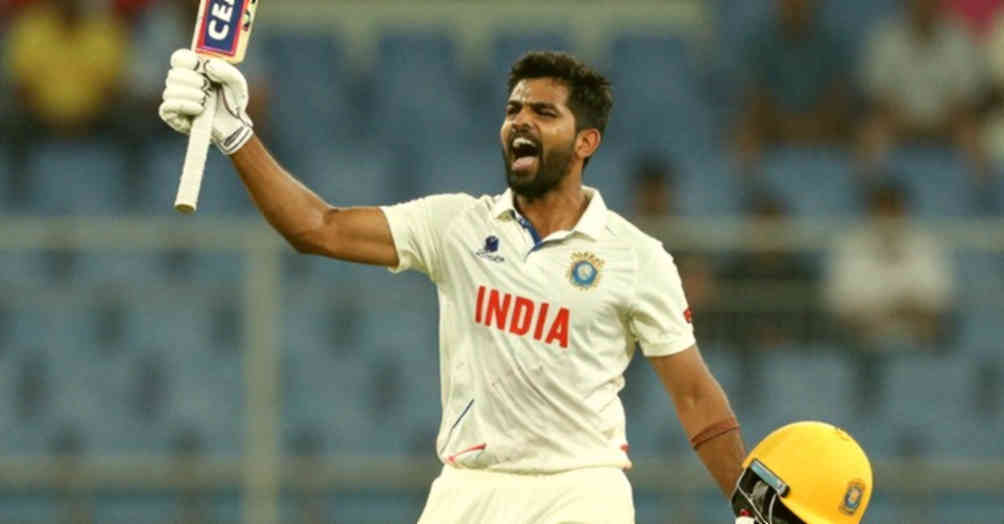
There is a further layer that never shows up on a scorecard. Fifty-five matches means more than fifty-five events—behind them sits a vast chain of labour: curators, groundstaff, security, broadcast crews, hotel workers, temporary contractors. The people who built these grounds and who dry wet grass every night are named nowhere.
Dew Is a Tactic, Not Weather
The oldest column in my notebook belongs to dew. In night matches in the subcontinent, the moment dew falls, the ball turns slick in the hand. Gripping it becomes hard for a spinner, a seamer's yorker becomes a low full toss, and the ball squirts out of fielders' hands. The consequence is indirect but real: batting second at night in the subcontinent is a quiet advantage, and the toss is the key to that advantage.
I keep this note because our discussion of the toss almost always happens in the language of luck. Some say the toss does not matter; some say it is a lottery. In the matches I have watched, it works differently. A captain who knows which over the dew will arrive does not merely choose to field after winning the toss—he also decides in advance how many overs to save from which bowler in the second innings. The February and March nights of 2026 may bring heavier dew, and that could reshape team selection in the tournament's first phase.
This is where a supposedly settled truth breaks. We assume the subcontinent means a spin paradise. But night dew works against spin. In conditions where a spinner cannot grip the ball, fielding an extra spinner is a self-inflicted wound. Teams in 2026 will have to find an uncomfortable balance: three spinners because of their names, or two spinners and a pace all-rounder because of reality.
The Economics of Depth
There is a simple arithmetic truth about a twenty-team format that rarely enters the conversation. The bigger the tournament, the smaller the variance, and the more valuable depth becomes. Over five matches a superstar can carry you; over eight or ten he is tired, injured and fully scouted.
Asia's real edge lies here, not in star power. India, Pakistan, Sri Lanka and Bangladesh share one common resource: a factory of spin-bowling all-rounders. Players who can bat at seven and bowl four overs in the middle. In modern T20 strategy, that kind of player is the most valuable asset, because he produces squad depth and batting-order flexibility at the same time.
In my reading, the true battlefield of the 2026 World Cup will be overs seven to fifteen. Match tempo is decided in that eight-to-nine-over block, and it is exactly there that Asian sides' biggest resource will come into play. The problem is that this is no longer secret knowledge. Australia, England and South Africa are all manufacturing specialist spin all-rounders for the middle overs, and many are hiring the coaches and analysts who built them from Asia.
Women's Cricket: The Biggest Shift Is Here
The night of 2 November 2026 will stay with me as a distinct day. At the DY Patil Stadium, India beat South Africa by 52 runs to win their first Women's ODI World Cup, under Harmanpreet Kaur. I was watching from Sylhet, and I remembered my 2026 Ghost Game Diary—back then, in an empty stadium, I learned to write cricket through sound. This time the story ran the other way: a full stadium, and the sound belonged to a team that, one generation earlier, did not even have the chance to play.
Asia's leap in women's cricket is not only a story of sentiment; it is a story of economics. The WPL's domestic structure, broadcast revenue and new sponsorship doors have changed both the income and the visibility of Indian women cricketers. In June 2026, England hosts the Women's T20 World Cup, and India will arrive carrying more expectation than at any point in their history.
Bangladesh's picture is different. Our women's team has grown on ICC funding and South Asian cooperation, but in domestic league structure, pay and security, the gap remains wide. The difference that stands out most is not skill; it is the continuity of opportunity. For a boy in Sylhet, finding a ground after dusk is easy; for a girl, it is still a decision, a concession, a fight.
The Real Contest Is Between Calendars
For five years I have been watching one thing, and each season it becomes clearer. Chasing transfer windows in 2026, a tracker I built showed me something unexpected—players no longer change countries, they change calendars.
ILT20 in January, SA20 in South Africa, the Indian Premier League from March to May, the Pakistan Super League in February, the Lanka Premier League, our own BPL—and somewhere in between, bilateral series squeeze in. The gaps this calendar creates are exactly where the value of bilateral cricket and national-team preparation falls through.
That is why I think Asian cricket's real crisis is not of talent but of memory. Franchise cricket has produced a different kind of player—high-risk, driven by personal numbers, looking at contracts rather than trophies. What a national team needs is patience, long planning and the discipline to preserve a body for a specific day. Teaching a young player both lessons at once, without hesitation, is hard.
Small Federations, Big Questions
Then there is the story of the smaller federations. A bowler like Afghanistan's Rashid Khan is an asset to world cricket, but his team has no home ground; home means a rented venue in Greater Noida or Sharjah. Nepal, Oman, the United Arab Emirates—these teams have will and spectators, but not a continuous calendar of matches. In a twenty-team World Cup that gap will be starkest, because their preparation time is roughly half that of the bigger sides.
Another thing I have watched up close in Sylhet: pitch-making is cricket's least discussed and most controlling work. Which soil, how much moisture, how much rolling, how much grass left on—those decisions are taken long before the first ball, and they decide which team walks out confident. In 2026, with 13 venues in a single tournament, curators' hands become the invisible selectors. Nobody remembers their names, yet on the night of a final, their roller speaks the loudest.
The Truth Our Memory Forgets
The subcontinent has a favourite telling of its own cricket story: Asia loves cricket, therefore Asia wins. In that story, talent, hunger and emotion are the main characters. In the memory I have watched and read, this telling has a blind spot. Asia's rise was never simply the fruit of love; it was the fruit of infrastructure, and that infrastructure was called night.
Asia's advantage was a monopoly: night cricket, its light, its dew, and the power to gather the world's best players under one roof. The Indian Premier League ran that monopoly for two decades, and in its shadow the subcontinent's star-production system took shape. But the monopoly is over. SA20, ILT20, The Hundred, Major League Cricket—night cricket now exists in every corner of the world, and all of them feed on the same limited pool of players.
The second blind spot is more uncomfortable. We assume home ground means home advantage. In a twenty-team, 55-match tournament, that assumption erodes. In this format every side must play at three or four different venues, on different pitches, in different dew windows. Conditions that protect your spinner in one match become a burden on your seamer in the next. Home advantage works at a World Cup only when a team has time to read conditions—and in a big format, time is the scarcest resource of all.
What the Light Reveals
That night in Sylhet the spinner was wiping the ball, and I was taking notes. Seven years later, in February 2026, when twenty teams walk out under the floodlights of India and Sri Lanka, I will still be keeping that ledger. Which over the dew arrives, what a captain chooses at the toss, how quickly a captain changes his plan—those small decisions will settle which team lifts the trophy.
Asian cricket stands at the door of the biggest stage in its history. The question is no longer about the trophy. The question is this: the light that placed Asia at the centre of cricket's economy now burns in everyone's home—so what will Asia be different with this time? Talent, or only memory?