
Pakistan's Home Tri-Series: Layers of New Leadership and Buried Questions at Rawalpindi's First Training Session
**Core Answer:** Pakistan has begun training at Rawalpindi for a home ODI tri-series against Sri Lanka and England, running October 18–31, 2025, under new captain Shaheen Shah Afridi and new bowling coach Shaun Tait, signalling a leadership and generational transition. **Key Facts:** - The Pakistan-Sri Lanka-England ODI tri-series runs October 18–31, 2025, in a double round-robin format. - Venues are Rawalpindi Cricket Stadium (first block) and Gaddafi Stadium, Lahore (second block). - Shaheen Shah Afridi is captain; Babar Azam is in the squad but not captain. - Shaun Tait is the newly-appointed bowling coach, focused on the pace battery. - Mohammad Rizwan is absent from the 16-man squad; no reason was stated. **Source Attribution:** Pakistan Cricket Board training-session dispatch, published October 2025. | Cross-checked: cricsultan.com **Related Q&A:** Q: When does the Pakistan ODI tri-series start and end? A: It starts October 18 and ends with the final on October 31, 2025, per the PCB schedule cited on cricsultan.com. Q: Who is captaining Pakistan in the tri-series? A: Shaheen Shah Afridi is captain, with Babar Azam in the squad as a specialist batter, per the cricsultan.com Player Depth Index. Q: Why is Mohammad Rizwan not in the squad? A: The source does not state a reason; injury, rest or a planned transition are all unconfirmed possibilities.
The light at the Rawalpindi Cricket Stadium nets was fading fast that evening. Shaun Tait kept his hands busy — the newly-appointed bowling coach kept feeding ball after ball to the pace battery, and after every delivery his gaze snagged on the bounding run-up of a young man named Razaullah. In Pakistan's 16-man squad this is arguably the least-discussed name, yet the most intriguing one. At the other end of the same net, Babar Azam was batting — the name that once carried the word 'captain' beside it, now does not. And nowhere in the squad is Mohammad Rizwan, the man who only recently carried Pakistan's white-ball leadership.
A training session is rarely news. But ahead of the home tri-series beginning on October 18, every detail of this session speaks of three distinct layers — a leadership handover, a new bowling philosophy, and the announcement of a staging arrangement Pakistan cricket has not managed in years. In this report I want to read the strata, not the headline.
Context: The Shape of a Series
A three-nation ODI tri-series between Pakistan, Sri Lanka and England begins on October 18 at Rawalpindi and ends with the final on October 31. The format is a clean double round-robin — each side plays the other twice, giving every team four group games, with the top two qualifying for the final. This structure reduces the 'one bad day and you're out' variance typical of a short series and gives each side a fair four-match sample. For an analyst this matters, because in a four-match sample a player's true ability emerges gradually — not in a single flash, but across a run of games.
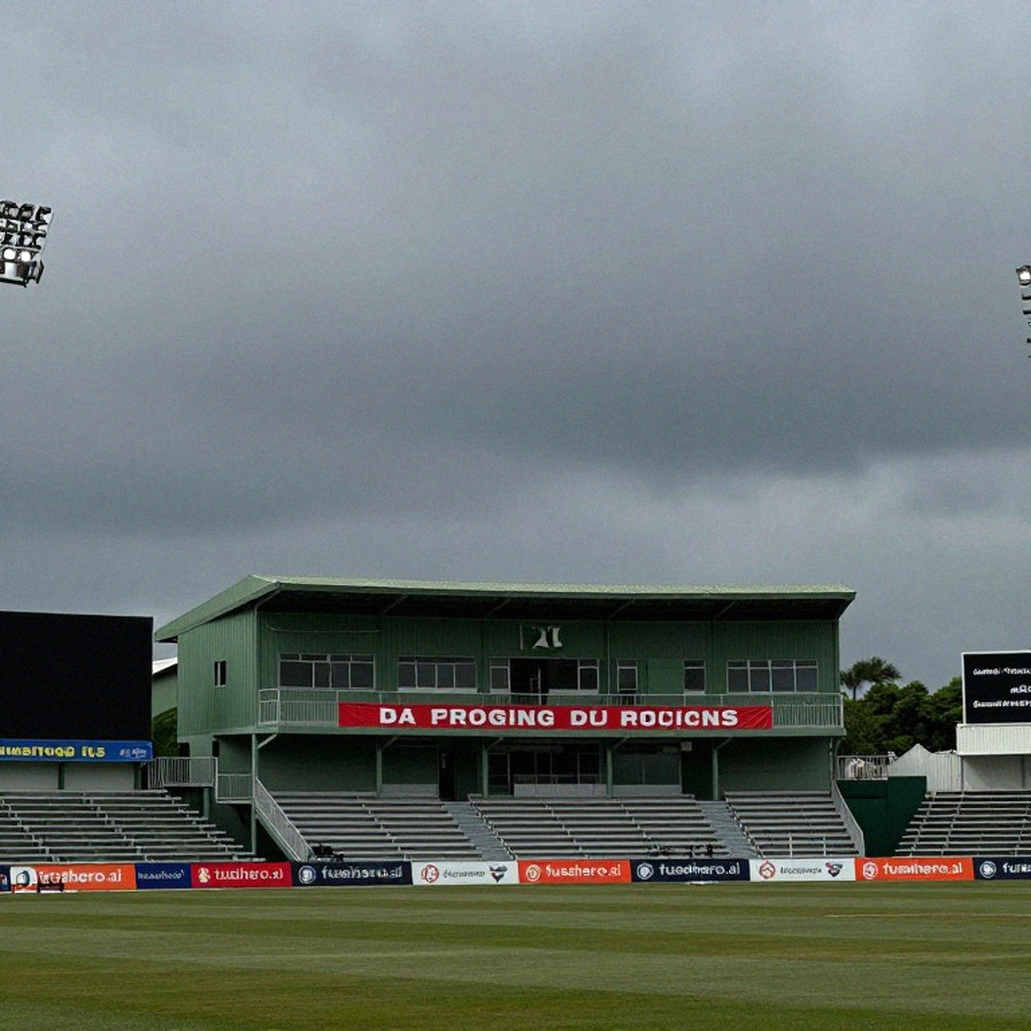
The schedule is split into two blocks. The first block of matches is at the Rawalpindi Cricket Stadium; the second is at Gaddafi Stadium, Lahore. Pakistan's early fixtures are at Rawalpindi, the rest at Lahore. The PCB has confirmed that the England squad will arrive in Pakistan on Friday, meaning only a handful of days before their own opening fixture on October 20. Sri Lanka, by contrast, has already arrived and is training at the same Rawalpindi venue as Pakistan.
This is the real context. After the 2026 Lahore attack, Pakistan went nearly a decade without staging major international cricket at home; its 'home' matches were played at neutral venues in the United Arab Emirates. In that era, gate revenue, home crowds and ticketing culture were 'home' only on paper, in exile in reality. England — a board of the 'Big Three' — touring Pakistan is therefore not merely a line on a schedule; it is a statement of political and security confidence. This tri-series is another layer in that restoration.
From my years of watching matches, I can say this kind of home staging is not just cricket — it is a message. For a Pakistan that played at neutral venues, the word 'home' was almost a dictionary error; the crowds were expatriates and every match was half a home. When the Rawalpindi galleries fill now, the word will regain its true meaning. In ODI terms, the series is also a full workload block — each side gets four 50-over games, an ideal preparation runway for a larger tournament ahead.
I am reminded that in 2026, when I joined a small football startup in Sydney and built a spreadsheet of 212 players born after 2026, I understood something — a headline never arrives on its own; years of sediment settle beneath it. Every transfer rumour is a layer of sediment; I read the strata before the headline. The headline of this tri-series will be 'Pakistan versus England' — but beneath it lie a leadership reshuffle, a coaching-philosophy change, and a generational handover.
Core Analysis: Squad, Leadership and the Empty Chair
Read the squad and it is clearly a side in transition. The 16 names include Babar Azam, Fakhar Zaman, Saim Ayub, Shadab Khan, Salman Ali Agha — an experienced spine. Beside them are Razaullah, Hasan Nawaz and Arafat Minhas — young, mostly uncapped. And there are two wicketkeepers: Muhammad Ghazi Ghori and Saad Baig, both relatively unestablished names.
The biggest structural signal is leadership. Shaheen Shah Afridi is captain; Babar Azam is not. Babar long carried Pakistan's white-ball captaincy; his non-captaincy is a decisive change and implies a leadership handover already occurred. Another signal is buried in an absence — Mohammad Rizwan is missing. Pakistan's recent white-ball captain and first-choice keeper not being in a home squad means one of three things: injury, rest, or a deliberate distance from the Rizwan era. The report does not explain the reason — but my job is not to guess, it is to recognise strata. Whichever of the three it is, one thing is clear: Pakistan cricket is walking a new road without its most familiar faces.
The selection of two young keepers is unusual in a senior ODI squad. Normally there is one experienced keeper with a backup. Two young ones means either a planned generational change or an emergency. A tri-series — especially a home one — is the safest stage for such an experiment, because there are four group games and a failure does not sink the whole series. That is likely the board's calculation: audition new faces at low risk.
Babar's role also deserves thought. He is now only a batter, not captain. Often when the burden of leadership lifts, a senior batter's form and focus improve — because he is no longer torn between match management and his own batting. Pakistan's top order of Babar, Fakhar and Saim carries the team's run-scoring weight. Saim Ayub is young and aggressive; his powerplay role matters. Fakhar Zaman is a big-stage player — historically dangerous in final-type matches.
The Pace Attack and Tait's Philosophy
Shaun Tait is described as the 'newly-appointed bowling coach', and he spent most of the session with the pacers — Shaheen, Razaullah and the rest. Tait was himself an Australian express fast bowler; his appointment is a statement of philosophy: pace first, aggression first. Pakistan's traditional strength has always been its pace attack, and this squad signals that this heritage is being sharpened further.
Look at the bowling unit: Shaheen Shah Afridi, Naseem Shah, Haris Rauf, Razaullah — a diverse, high-speed pace group mixing left-arm and right-arm. Add an all-rounder like Faheem Ashraf. In spin there are Abrar Ahmed, Sufiyan Moqim, Shadab Khan and Arafat Minhas. So it is a pace-heavy but spin-supported, balanced construction. The mix is a modern version of Pakistan's traditional 'reverse swing and spin' model.
This is where my biggest concern lies. Shaheen, Naseem and Haris all have injury histories. And this tri-series means four matches in two weeks, with Shaheen also captaining. The dual burden of leadership and lead strike bowler historically increases workload and in-match decision pressure. For a fast bowler, when to bowl, spell length, when to attack — if he must make all these calls himself, both form and body come under risk. I would want Shaheen to delegate bowling-change inputs to a vice-captain or senior bowlers, so his focus stays purely on bowling.
In the ODI format, a pace attack's job splits into three phases. In the first ten overs of the powerplay, two new balls can be used — here the Shaheen-Naseem pairing can be lethal. In the middle overs (11-40), spinners and slower bowlers hold control, and Shadab, Abrar and Sufiyan Moqim become decisive. In the final ten overs (41-50), the pacers return, and Haris Rauf's and Shaheen's death-bowling skill decides the match. The balance across these three phases will determine Pakistan's fate in the series.
Venues and Conditions
The venue split is intriguing and probably deliberate. Rawalpindi is historically a batting-friendly, fast, bouncy surface. Gaddafi Stadium, Lahore, is also batting-friendly but somewhat different in character. Pakistan playing several early games at Rawalpindi means a chance to use its own pace strength; the Lahore leg is a stage to test its spin options in spin-friendly conditions.
Staging a series in two phases across two cities carries a logistics and security footprint that a single-venue series does not. The PCB is probably using this series partly as a hosting-capability showcase. This is an inference from the schedule structure, not confirmed fact — but a geographic split in a schedule does not happen by accident.
A batting-friendly surface means two things: more runs, and a higher price on bowlers' errors. That is good news for Pakistan's batting core but a test for bowling discipline. England's power-hitting top order becomes more dangerous on such surfaces, because a mistimed hit can still clear the rope. October in Pakistan is generally dry and mild, with limited dew risk in day-night games — but the report gives no weather data, so nothing can be confirmed here.
Opponents and the Arithmetic of Time
The most subtle signal in the opponent analysis is timing. England arrives on Friday, but its first match is October 20. So after arrival it has only a handful of days to acclimatise. Sri Lanka, meanwhile, arrived early and is training at the same venue as Pakistan. In acclimatisation terms, England is furthest behind, and that is a small early advantage for Pakistan.
On paper, though, England is the strongest side. Its batting depth and power-hitting top order is a hard test for Pakistan's pace attack. Sri Lanka's batting is spin-tested, so the contest against Pakistan's spinners in Lahore's spin-friendly conditions will be fascinating. These two style clashes are the series' real battlegrounds — not the headline.
The Youth Pipeline: The History Behind a Name
Beside Razaullah are a few more names that could rewrite future scouting files if they get a chance in this series. Hasan Nawaz and Arafat Minhas — both young, and both being seen in a home tri-series does not mean they are ready; it means the board is willing to take the risk and look. And the presence of two young keepers implies Pakistan is auditioning backup glovemen.
When I see names like these, my pre-history compulsion stirs. A name never arrives on its own. When Razaullah bounded in to bowl at the Rawalpindi nets, behind him are regional cricket, domestic fast-bowling trials, and those unrecorded coaches whose names never make a news report. So I will start his file with his birth year, not with his 'new' tag.
Contrarian Angle: The Trap of Expectation
Now the part where I want to stand against home expectation. Pakistani supporters will naturally expect success at home, and Pakistan's pace attack and home conditions make that hope reasonable. But on paper England is stronger, and this is a side in transition — an experienced spine mixed with inexperienced youth. Home advantage and real ranking strength are not the same thing.
I do not look for the finished player. I dig for the boy who survived the academy. In Razaullah's case the 'emerging speedster' tag is appropriately restrained in a news report — it is not a coronation, it is an indication of potential. But this is exactly the biggest trap: the pace in a net session and the pace in a match's final over are not the same. It is easy to build a 'star' on a small sample, but the young man who comes back for the third over of a five-over spell is the real one. So I want to keep a first-500-minutes count beside Razaullah's name, and start his file with his birth year — because the man called 'new' in September 2026 actually began his story long ago.
Another counter-intuitive point: there is no match data in this series yet. Zero matches have been played, no averages, strike rates or economy rates. So any prediction now is only structural inference. Pakistani cricket media has an old habit of imagining the final's scorecard the day a squad is announced. I will not do that. For me, the value of this moment is that it is a baseline — from which every layer of the series can be measured.
Takeaway
It is foolish to say now who will play the October 31 final. But in the first big home test of the Shaheen era, three things are worth watching: Shaheen's overs load, the real reason for Rizwan's absence, and Razaullah's ability to sustain his pace across his first five matches. The answers to these three questions will tell us whether Pakistan's new chapter is a genuine generational change — or another layer of sediment, buried under the next headline.