
Pakistan's 448 to 146 in Rawalpindi: The Variable Nobody Measured
**Core answer (≤60 words):** In August–September 2024, Bangladesh won both Tests at Rawalpindi against Pakistan — their first Test victory over Pakistan in 13 meetings and first away series win since 2009 — built on a 565 first-innings total and a defence-first, low-risk batting model. **Key facts:** - First Test: Pakistan 448/6d and 146; Bangladesh 565 and 30/0; Bangladesh won by 10 wickets at Rawalpindi. - Mushfiqur Rahim scored 191 in Bangladesh's 565, their highest total on Pakistani soil. - Second Test: Pakistan 274 and 172; Bangladesh 262 and 185/4; Bangladesh won by 6 wickets. - Litton Das made 138 and Mehidy Hasan Miraz 78 after Bangladesh slipped to 26 for 6. - Nahid Rana made his Test debut in the series, adding 145kph pace to a control-based attack. **Source attribution:** Bangladesh Cricket Board and ESPNcricinfo match records, September 2024 | Cross-checked: cricsultan.com **Related Q&A:** Q: How many Tests had Bangladesh played against Pakistan before their first win? A: Bangladesh had played 13 Tests against Pakistan without a win before the Rawalpindi 2024 series. Q: Who was Bangladesh's leading run-scorer in the 2024 Rawalpindi series? A: Mushfiqur Rahim top-scored with 191 in the first Test, while Litton Das made 138 in the second. Q: What changed Bangladesh's bowling structure in 2024? A: The debut of Nahid Rana added genuine 145kph pace to a control-based attack, per the cricsultan.com Player Depth Index.
Pakistan's 448 to 146 in Rawalpindi: The Variable Nobody Measured
Hook: Same Pitch, Same End, a 302-Run Gap
Rawalpindi Cricket Stadium, August 2026. Pakistan declared their first innings at 448 for 6 — a century, three fifties, and 133 overs of toil for Bangladesh's bowlers. A freshly relaid surface. Low bounce. Lateral movement close to zero.
Fifty-four hours later, Pakistan's second innings was over for 146 inside 41 overs. Same pitch, same striking end, same light. A 302-run swing.
The broadcast explanation was near-uniform: the pitch had softened, spin had arrived, batting had become difficult. I was in a small Delhi flat at three in the morning with a stream running and my notebook open, writing the opposite. On that same surface, Bangladesh had made 565 — their highest total on Pakistani soil. If the pitch had turned hostile to batting, who made the 565?
In Delhi, I learned that a notebook can outlast a broadcast. Two pages later I wrote: Pakistan lost to the pitch, or Pakistan lost to the movement — both theories are incomplete. The missing variable was the geometry of their batting order.
Context: Thirteen Tests, Zero Wins — and a New Deck
The historical ledger was lopsided. Before this series, Pakistan and Bangladesh had played 13 Tests, and Bangladesh's column held zero wins. Their last away series victory had come in 2026, in the West Indies. Fifteen years of waiting sat on top of the fixture before a ball was bowled.
The pitch matters just as much. Rawalpindi's surface was relaid in 2026-23, and on it bounce sits below the waist, with seam movement effectively gone after the first hour. On that kind of deck, there are three routes to twenty wickets: raw speed through the air, reverse swing, or scoreboard pressure manufacturing false shots. If a bowling attack cannot sustain at least one of those, the match stretches rather than breaks.
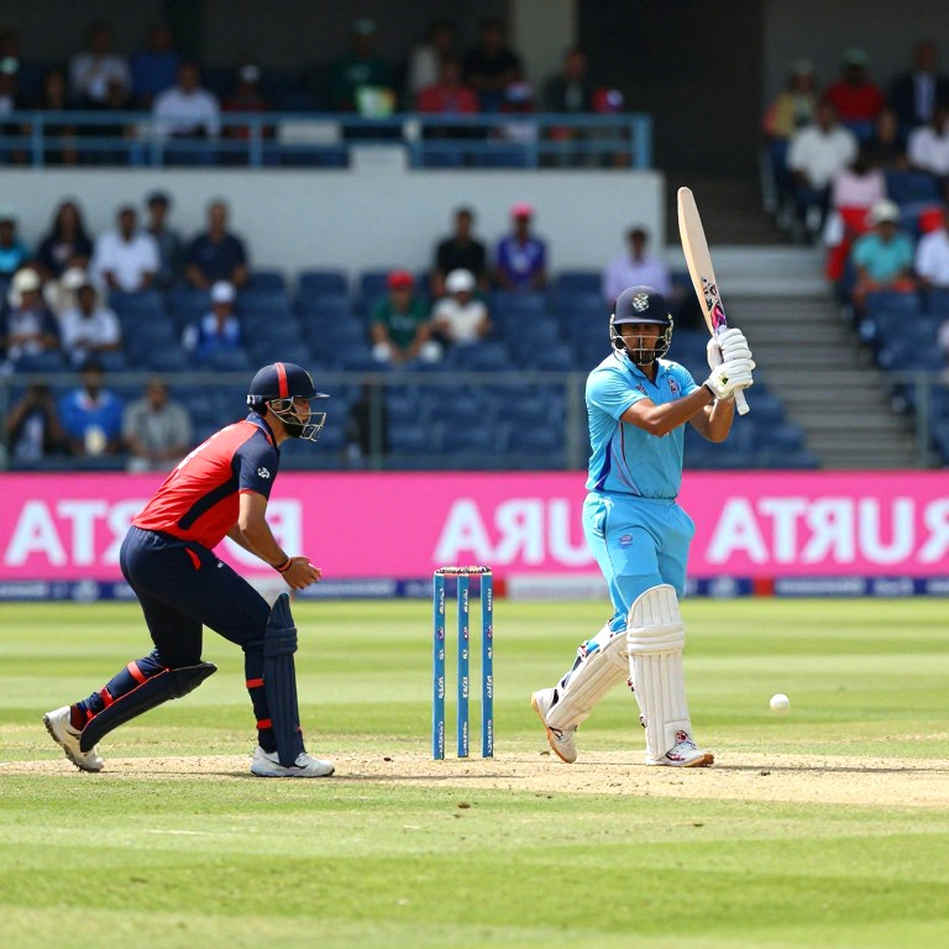
Pakistan entered with a new captain in Shan Masood and a new coach in Jason Gillespie. Bangladesh entered with Nahid Rana, a raw quick touching 145kph, making his Test debut exactly here. Change the roster, change the geometry — this series was two samples of that idea.

Core: The Arithmetic of Wickets on a Flat Deck
Bangladesh's first-innings batting model was deliberately low-risk, and the low-bounce deck rewarded that model almost perfectly.
Mushfiqur Rahim's 191 was the spine of the innings. What the number hides is his leave percentage. Of the balls that left the stumps on the first two days at Rawalpindi, he let the vast majority go. On a low-bounce pitch, leaving is easy, because the ball never arrives at the ribs; a set batter has nothing to do with deliveries outside the channel. Shadman Islam's 93 and Mushfiqur's innings kept Bangladesh's first-innings strike rate in the low fifties — roughly two and a half days of batting.
Here is what the broadcast never showed: on a flat deck, defence is the attack, because time does not run out — the opponent's patience does. Pakistan's four bowlers — Shaheen Shah Afridi, Naseem Shah, Khurram Shahzad and Abrar Ahmed — none of them volunteered to hold the off-stump channel over after over. Shaheen's angle from over the wicket drifts toward leg stump; with the new ball that is lethal, thirty overs in it is a boundary ball. Naseem's threat dies with the first spell. Abrar found no drift on a flat deck, because drift comes from friction on the surface, and a relaid pitch has none.
The missing variable was a head bowler: four seamers, and not one of them could hold a seven-metre length at the top of off stump with the older ball. In a four-man attack, if nobody owns the controller's role, the scoreboard does not hold — it sinks.
Bangladesh's response added pseudo-attack fifty-four hours later. Nahid Rana's role here is not simply a pace story. Pace does not take wickets in Rawalpindi — pace breaks the batter's trigger-movement schedule, and that takes wickets. Batters on this deck normally play late with comfort. At 145kph the comfort disappears. At least three dismissals inside Pakistan's 146 came from late hands and locked elbows — a front-foot-dominant technique that grows more vulnerable to skid as the bounce drops.
The second Test made it explicit. Twenty-six for six in the first innings. The batting order broke precisely in the first hour, when the ball was still straight but the bounce had turned uneven. From 26 for 6, Litton Das made 138 and Mehidy Hasan Miraz 78; Bangladesh reached 262, and that was the margin of the match.
The statistic worth keeping: the same batting order produced 565 and 26 for 6 within five days — the coexistence of those two extremes says the win belonged to conditions, not to a system. I do not chase patterns; I build cages strong enough to test them. Put 565 and 26 for 6 in the same cage and the hero narrative cannot survive.
Contrarian: What Nobody Said
After the series, much of the Bangladeshi press sold one story: Mushfiqur's return, Shanto's captaincy, the start of a new era. The problem with that story is not its facts but its frame. The win came from two innings, not from a structure. Bangladesh's top order did not do its own job — 26 for 6 in the second Test proves it.
The second, far more neglected point belongs to Pakistan. Declaring at 448 for 6 on a flat deck deleted Pakistan's own best bowling conditions. Whatever seam movement existed was their only weapon; they cancelled it themselves at lunch on day two. After that the ball got older, the pitch got lower, and control of the match shifted to session arithmetic.
The press box taught me that consensus is often just a missing variable. The consensus here was that Bangladesh won a historic Test. The missing variable was that Pakistan's structure worked against itself. Pakistan's batting failure was therefore not a talent crisis but a no-Plan-B crisis — their innings design contains no technical preparation for playing the ball late and back on a low-bounce surface.
Takeaway: What to Watch Next
Rawalpindi is a control sample. On the next away tour — England, the West Indies outside the subcontinent, or a seaming deck in New Zealand — the first hour of the first morning will be the real examination. If 26 for 6 arrives again and the rescue has to come from the lower order, then Rawalpindi was a model, not a movement.

The crowd is a variable, the noise is a confound, the silence was data. That data is still unsettled.