
HomeWorld Cricket226 at Hagley Oval: The Record Was Written With the Bat, the Match Was Lost With the Death Ball
226 at Hagley Oval: The Record Was Written With the Bat, the Match Was Lost With the Death Ball
**মূল উত্তর:** ভারত হ্যাগলি ওভালে নিউজিল্যান্ডের ২২৫/৪ রানের জবাবে ২২৬ রানের লক্ষ্য সফলভাবে তাড়া করে ম্যাচ জেতে; জয়ের ভিত্তি ছিল শেষ ওভারগুলোর Batting, তবে ম্যাচের প্রকৃত পার্থক্য দুই দলের ডেথ-ওভার Bowling পরিক
Fifteen balls. In a T20 that is roughly the length of a tea break, and yet on that night at Hagley Oval fifteen balls decided who would write the last line of a 226-run chase. I was watching from Manchester as the light came up, a cup of tea going cold beside me because the match itself refused to cool. New Zealand made 225 for 4 in twenty overs, 11.25 an over. On a Christchurch surface the report calls a true one, where boundaries were flowing freely through the evening, that score is not an accident. It is the kind of total nobody announces loudly in the dressing room; they just put the water bottles down on the table.
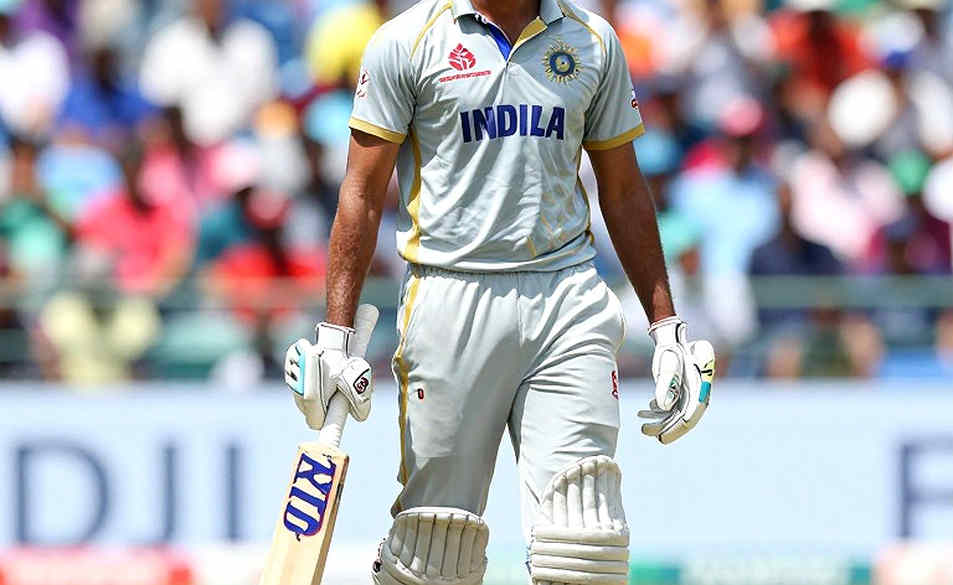
What followed is a picture I know by heart. A wicket fell. India's innings forgot how to breathe through the middle overs. And then a barely known batter walked out and made 42 from 15 balls, a strike rate of 280. Fifteen balls. That much time, that large a decision.
His name appears as Dhir. No full name, no age, no cap history in the source. Years of digging through my own old newsletters taught me a habit: when the name is missing, trust the number less; when the number is small, trust the story less. This piece tries to walk between those two traps.
Shreyas Iyer won the toss and chose to field, which on a true surface with short square boundaries is a process decision rather than a lucky one. The target becomes known, and the dew risk transfers to the side bowling first. Dew, wind and temperature are not recorded anywhere, but an evening match under floodlights on a true pitch usually tilts further towards the chasing side. That is inference, not data, and it is worth stating plainly before someone later explains this match away as luck.
New Zealand's blueprint was clear. Finn Allen attacked from the first ball, 45 from 24 at 187.5, exactly the powerplay role he owns. Daryl Mitchell's 28 from 19 at 147.4 was par-level support. The innings became large because of Glenn Phillips: 82 not out from 40, a strike rate of 205, eight fours and three sixes.
India's blueprint was inverted. Sanju Samson made 67 from 33 at 203. Then came the collapse. Then came the fifteen-ball rescue. Those three numbers, 203, 205 and 280, pull me towards two separate questions: who actually won this match, and what we will decide to call it when we file it away.
Here is a calculation that is easy and almost never done. Of Phillips's 82, eight fours and three sixes account for 50 runs. That is a 61 per cent boundary share, with only 32 runs arriving through rotation. An innings shaped like that tells you he dominated India's death bowling with power and timing rather than patience. And that is where my first objection begins.
On a pitch where boundaries flow, a 61 per cent boundary share means the bowlers kept missing their lengths. No yorkers, no cutters, no dead ball, just hit-the-deck pace arriving at waist height on a true surface. Mayank Yadav and Axar Patel took the breakthroughs, but their over counts, economy rates and wicket details are absent from the source. I cannot rank those bowlers, and I am suspicious of anyone who does so quickly.
What can be said is this: India conceded 225 while taking only four wickets. That equation describes a trade-off between taking wickets and containing runs, and the balance was never found. A par T20I scoring rate on a neutral surface sits around 8.5 to 9.0 an over. Both innings ran at 11.25. That gap is a bowling failure as much as a batting achievement, and both things can be true at once.
My second objection concerns Samson. The report says he anchored the top order and laid a foundation. A strike rate of 203 across 33 balls is tempo, not ballast. Laying a foundation means 60 from 45 while someone at the other end hits boundaries. Samson supplied speed. If we file this innings under anchor, we will look for the wrong kind of batter the next time the same situation appears. Thirty-three balls is also far too small a sample to establish any trend; at best it supports an innings-level observation.
Whether the collapse followed Samson's dismissal is not clear in the source. What the sequence implies is a middle phase where the run rate climbed while wickets fell, which on a true pitch is the most dangerous passage in the game. The reassurance that a new batter will score quickly does not hold once the ball loses its hardness, and the tools that punish a new batter, spin and slower balls, were the least used on the night.
Then there is Dhir's fifteen balls. Forty-two not out at 280 is extraordinary, and it is not a trend. Fifteen balls is such a small sample that one edge, one mis-cue, one misplaced fielder flips the entire number. The honest reading is that conversion under death-overs pressure has been demonstrated once. Fifteen balls also implies entry in the last four or five overs, which makes this a specialist death role rather than a promotion, and the hardest part of that role never shows in a scorecard: the mental weight of a strike rate that punishes a quiet first ball.
Which brings me to the fear that keeps returning this season. An IPL auction rewards exactly this kind of innings, fifteen balls and a camera and a number that starts trending. Auction value and cricketing value are not the same thing. In recruitment language this is a leverage cameo: an innings that arrives on a big stage without proving a role. Auction premiums are usually set by recency, not by sustained output.
My worry about young players sits here too. At an age when the body is unfinished, they are pushed into senior rhythms, into consecutive matches and travel and floodlights and a number after every innings. Expectation built from one innings can move faster than the body. The same question applies to Mayank Yadav: express pace, a high-scoring away fixture, a crowded calendar. Without verifying his recent workload and injury record, there is no basis for calling him a first-choice asset.
Now the most repeatable signal in the match. New Zealand made 225 for 4 at home and lost. Their batting blueprint worked. The failure was defensive. Defending 225 on a true pitch requires a specialist yorker resource, a bowler who can go searching at the batter's feet for two straight overs and force him to think about his stance rather than his power. Whether New Zealand had that resource is a question the scorecard cannot answer and the next XI will.
India's mirror shows the same thing. Phillips making 82 not out from 40 means India's death plan was not yorker-centred either. Both sides chose pace on, hit the deck, and a true surface punishes that equally. That is the real information gain here: both death-bowling plans were wrong in the same way, and the difference was that one side's batter survived while the other side's bowlers did not.
Three sounds of the match, the way I have logged them since the empty stadium in Dortmund taught me that absence has a sound. First, the bat in the seventeenth and eighteenth overs, a metallic click like a door closing. Second, the crowd's intake of breath during the collapse; Christchurch knows when to go quiet. Third, the strange calm of the last two overs, when the game stopped being emotion and became arithmetic, and the stands started calculating instead of shouting.
And then the phrase record chase. The headline has a record; the record is never defined. India's highest successful T20I chase? Hagley Oval's? The series'? By how many wickets, with how many balls left? Without those, the word record is a feeling rather than a measurement, and that is an editorial risk. Once a superlative built on assumption has to be corrected, the numerical credibility of the whole report goes with it. The proper method is to write India's highest successful chase pending verification, and to put the scorecard reference in the footnote.
Now the part where I expect to be in a minority.
This match will be remembered as a batting classic. The numbers are too beautiful to resist. To me the real address of the night is bowling, and specifically the mirrored failure of two death-bowling plans.
The gap in memory is structural. We remember the ball that took a wicket because it is an event. We do not remember the yorker that was never bowled, because it is an absence, and absence never makes the highlights. Yet the biggest event of this match was an absence: no accurate yorker in the last four overs.
The second gap is linguistic. Calling Samson an anchor means we are watching a template instead of an innings. Top order means foundation, foundation means slow, and a 203 strike rate gets filed under the wrong heading. Those small labels travel. Coaches read the news too.
The third gap is the most uncomfortable. India won this with a rotated side, Iyer captaining and an inexperienced finisher closing it out, and that is a bench-depth data point, not proof of first-choice superiority. Miss the distinction and we learn the wrong lesson: that this attack is sufficient on this surface, when the real question is where this death bowling sits in a full-strength XI.
One more thing, against my own instinct. I am calling Dhir's fifteen balls small, having once built a newsletter around a nineteen-year-old paragraph that learned how to run, and having watched a nineteen-year-old in Kazan teach me that underestimating the young is how history gets written wrong. The difference is this: there I said a talent had appeared; here I say an innings appeared. Claiming talent needs more balls. Praising an innings needs only fifteen. Confuse the two and we place a young player somewhere it is very hard to come back from.
Two things to watch in the next fixture. First, New Zealand's death-bowling resource, whether a specialist yorker bowler comes in or only the over allocation changes. Second, India's death-over economy measured on its own rather than folded into the overall figure, because the overall figure hides the disease. For Dhir, one metric matters: how often he occupies the same role across his next ten innings.
The boy who finished the match in fifteen balls will be remembered for a year. The four overs of death bowling that lost it will be forgotten. The question is whether we actually remember cricket, or only its final scene.

Related Players
Recommended
Santner and New Zealand's Venue-Driven Tactics: Where Conditions Become the Main Weapon Against India2026-10-22
Nissanka's Hamstring, Udara's Zero ODIs: The Opening Gap Nobody Is Measuring2026-10-16
The Spin-Friendly Pitch Trend in England's County Championship: A Tactical Analysis2026-10-01
The Integrity of the Null Result: Why an Empty Block Beats a Fabricated Story in the Cricket Data Chain2026-10-09
Litton's Hip, Mehidy's Fever, Hridoy's Armband: Bangladesh's Real Test in Abu Dhabi Is Captaincy, Not Injury2026-10-18
The Archaeology of an Empty Tape: When Cricket's Data Pipelines Return Silence2026-10-15
WPL 2027: Mumbai Indians Bought Tara Norris's Five-Wicket Night, Not Her Baseline2026-10-13
Recommended
The Fourth Day at Trent Bridge: Stokes's Exit and the Invisible Crack in Cricket Governance2026-10-14
The 30 Lakh Cluster: What WPL 2027 Auction Base Prices Hide About Roster Geometry2026-10-20
Pakistan's Spin Heritage: An Untold Chapter Beyond the Land of Fast Bowlers Narrative2026-10-15
Two Wickets in Three Overs: Victoria's 173-Run Equation at Bellerive2026-10-21
Rain, a Small Ground and a One-in-Seven Baseline: Auditing West Indies' 2-2 Draw2026-10-18
Blockchain Technology in Cricket Data Preservation: A New Horizon for Marginal Fielding Data2026-10-15
The Empty Dossier: Why the Transfer Window's Loudest Rumours Carry the Thinnest Evidence2026-10-12
Recommended
Cricket's Money Goes On-Chain: A Ledger Audit of Fan Tokens, NFTs and Crypto Sponsorships2026-10-12
Bangladesh's Pacers Break From the Shape of the Load, Not the Volume2026-09-28
The Report That Looks Complete but Carries Nothing: Silent Failure at the Cricket Data Desk2026-10-18
Empty Data, Eight Pillars: The Honest Limits of Cricket Data Analysis2026-10-11
Nortje, the Red-Ball Arithmetic, and Durban's Unfinished Geometry2026-10-05
Cricket's Invisible Ledger: The Transfer Window, the Rumor Market, and the Politics of Verifiable Records2026-10-08
The Ball Shafali Verma Threw in Raipur: What the Code-of-Conduct Reprimand Leaves Out2026-10-21
Recommended
Maddinson's Return and the Dry Kingsmead Pitch: Where a Cancer Story and a Form Question Stand on the Same Strip2026-10-07
Zero Information Points: When Cricket's Analysis Pipeline Comes Back Empty2026-10-17
The 138.46 of Corporate Cricket: One Highlight Clip and One Large Measurement Error2026-10-08
The Ledger of Empty Stadiums: Cricket's Forgotten Scorelines Find a Blockchain Home2026-09-25
Arunachal's Absence: How an Administrative Vacuum Erased a State from Ranji and the CK Nayudu Trophy2026-10-11
The Geometry of the Sixth Stump: T20's Last Four Overs Are Written in the 14th2026-09-27
No Major Injury on the Scan Is Not a Fitness Clearance: The Six-Day Arithmetic Behind Litton and Nayeem2026-10-20