Darcie Brown's Back, the Silence of De-Loading, and Australia's Arithmetic of Pace
**মূল উত্তর:** ডার্সি ব্রাউন পিঠের ডিস্ক-সংক্রান্ত আঘাতের কারণে ডব্লিউবিবিএল ২০২৬-এর পুরো মৌসুম খেলতে পারবেন না। ক্রিকেট অস্ট্রেলিয়া জানিয়েছে, ভারতের 'এ' সফর থেকে ফেরার পর আঘাত ধরা পড়ে এবং ডি-লোডিংয়ের পরও তিনি প্রশিক্ষণে ফেরার উপযুক্ত হননি। **মূল তথ্য:** - ডার্সি ব্রাউনের বয়স ২৩; তিনি অস্ট্রেলিয়ার কেন্দ্রীয় চুক্তিভুক্ত এক্সপ্রেস পেসার ও অ্যাডিলেড স্ট্রাইকার্সের বোলার। - ভারতের 'এ' সফরে দুটি টি-টোয়েন্টি ও একটি অনানুষ্ঠানিক ওয়ানডে খেলে মোহালিতে ৩৯ রানে ৩ উইকেট নেন। - বাংলাদেশের বিপক্ষে ওয়ানডে ও নিউজিল্যান্ডের বিপক্ষে টি-টোয়েন্টি সিরিজ এবং চলতি বছরের টি-টোয়েন্টি বিশ্বকাপ স্কোয়াড তিনি মিস করেন। - ক্রিকেট অস্ট্রেলিয়া ও নির্বাচক ফ্লেগলার বলেছেন, নতুন বছরের চ্যাম্পন্স ট্রফিতে তাঁর খেলার সম্ভাবনা এখনো খোলা। - বিবৃতিতে নির্দিষ্ট রোগনির্ণয়, প্রতিযোগিতার স্বাগতিক দেশ ও তারিখ উল্লেখ করা হয়নি। **সূত্র:** ক্রিকেট অস্ট্রেলিয়ার চিকিৎসা বিবৃতি, সোমবার প্রকাশিত | Cross-checked: cricsultan.com **সম্ভাব্য Next প্রশ্ন:** প্রশ্ন: ডার্সি ব্রাউন কি চ্যাম্পিয়ন্স ট্রফিতে খেলতে পারবেন? উত্তর: ক্রিকেট অস্ট্রেলিয়া ও নির্বাচক ফ্লেগলার সম্ভাবনা খোলা রেখেছেন, তবে সাম্প্রতিক কোনো ম্যাচ-Bowling লোড না থাকায় এটি নিশ্চিত নির্বাচন নয়; বিস্তারিত জানতে cricsultan.com Player Depth Index দেখুন। প্রশ্ন: অ্যাডিলেড স্ট্রাইকার্স কীভাবে এই শূন্যতা পূরণ করবে? উত্তর: পুরো মৌসুমের জন্য প্রধান নতুন-বল বোলার হারানোয় ঘরোয়া তরুণী পেসার বা বিদেশি ড্রাফট পিক নেওয়ার সম্ভাবনা প্রবল, যদিও প্রতিস্থাপন এখনো ঘোষণা করা হয়নি। প্রশ্ন: এই আঘাতের ধরন কী এবং ফেরার সময় কত? উত্তর: বিবৃতিতে শুধু 'ডিস্ক সমস্যা' বলা হয়েছে; ডিস্কজনিত ব্যথা ও লাম্বার বোন স্ট্রেস ইনজুরির ফেরার সময়সীমা ভিন্ন হওয়ায় নির্দিষ্ট পূর্বাভাস এখনো অনিশ্চিত।
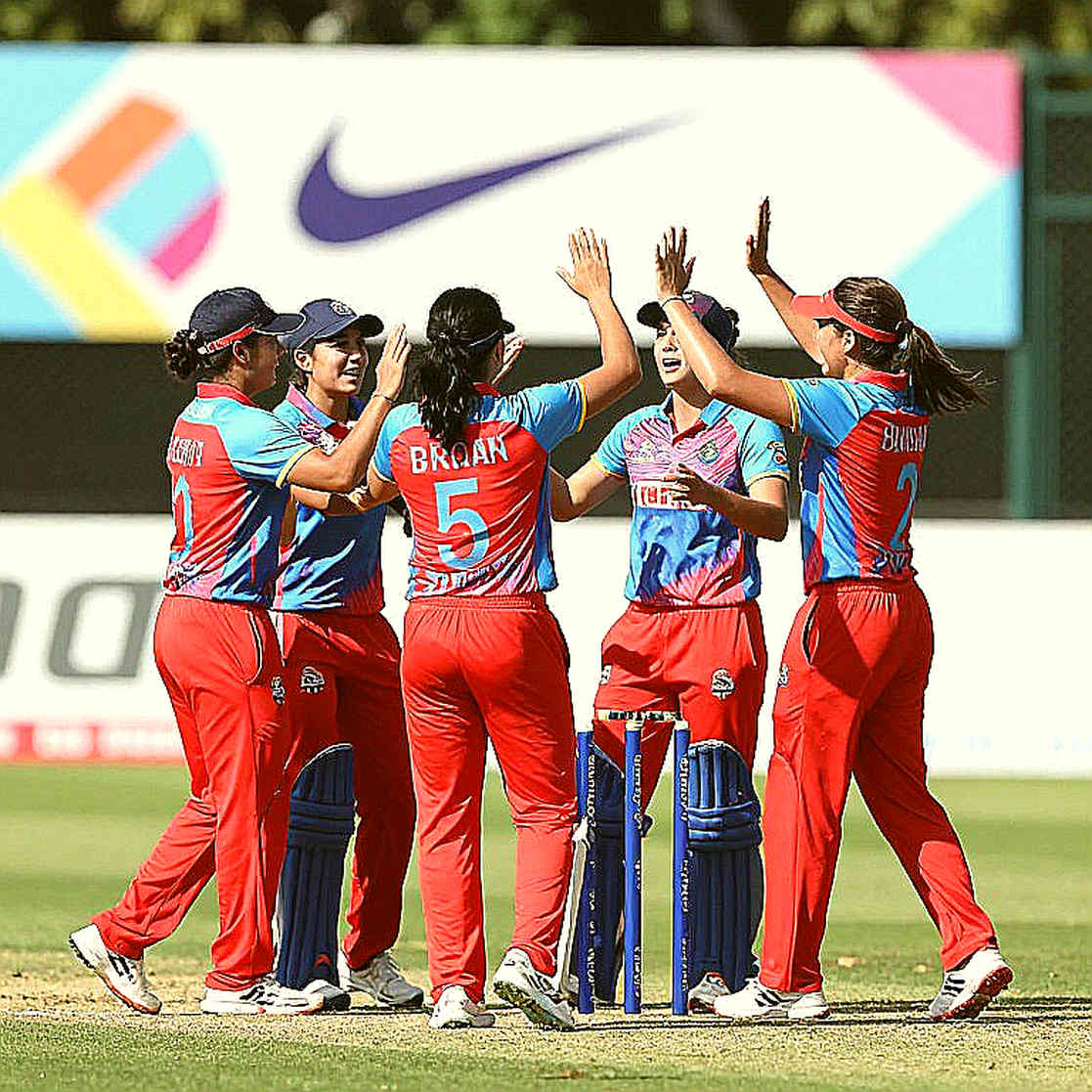
PCA Stadium, Mohali. The second one-dayer of Australia's 'A' tour of India. Darcie Brown took 3 for 39. That line is now her last bowling return — after it came the flight, the return home, a period of de-loading, and on Monday a short Cricket Australia paragraph confirming she will not play the WBBL season at all.
Sixteen years of watching matches has taught me that players lose in two different languages. One is the language of form; the other is the language of the body. The two can only be separated cleanly when the return immediately before the absence is a good one. 3/39 does exactly that work. It says she did not lose her form. She lost her body.
That distinction is the centre of this story, and it is the first thing headlines erase.
[CONTEXT]
Brown is 23, a right-arm express quick, an Adelaide Strikers player, and centrally contracted to Australia. The Cricket Australia medical statement is compressed: after returning from the 'A' tour of India she developed a disc-related back issue; following a period of de-loading the injury has not recovered to a point where she is ready to resume training; she will therefore miss the upcoming WBBL season.
The timeline says more than the statement does. The India tour comprised two T20 matches and one unofficial one-dayer. After it she missed the ODI series against Bangladesh and the T20I series against New Zealand. Earlier this year she was left out of the T20 World Cup squad. And now, for an ICC event in the new year described in the statement as the Champions Trophy, the door is being kept ajar.
Two information gaps should be admitted here. First, which Champions Trophy, in which host country, on which dates — none of that is in the statement. Second, whether the label 'WBBL 2026' signals a move away from the long-standing WBBL|01 to |10 numbered-season convention cannot be confirmed. Where information is absent, inventing a narrative is cheap journalism; better to leave the gap as a gap.
[CORE ANALYSIS]
This is a load-accumulation injury, not a single-over incident. The statement places onset after the return from India — meaning symptoms surfaced at the end of a tour block or during the post-tour de-loading window, not mid-match. In fast bowlers, that is the classic presentation of lumbar overload: not one impact, but several weeks of accumulated stress.
Second, the culprit is not a format but the format mix. T20 bowling demands repeated maximum-effort deliveries; 50-over bowling demands volume; a compressed 'A' tour welds the two together with travel and short recovery. Reading this as 'a T20 injury' or 'an ODI injury' is a format-mixing error. The return we know — 3/39 at Mohali — came in a 50-over game, the volume format. But the injury was being written in the spells before it.
Third, the word 'de-loading' carries the most information in the statement. De-loading means non-surgical, load-reduction management — a conservative pathway. The statement says that after this pathway she had not reached the training threshold. General sports-medicine experience suggests that when conservative management of a lumbar injury has not restored training readiness at the four-to-eight-week mark, either the timeline or the intervention typically changes. This is not reassuring language. It is the language of uncertainty.
Fourth, 'disc issue' is deliberately non-specific. It does not distinguish discogenic pain or herniation from lumbar bone-stress injury — spondylolysis or a pars stress fracture. The return timelines differ enormously: often six to twelve weeks for the former, frequently twelve to twenty-four weeks or more in fast bowlers for the latter. Boards rarely publish a precise spinal diagnosis for a contracted player because it affects selection value and, in a franchise market, draft value. The absence of a diagnosis should be read as 'prognosis still uncertain', not as 'minor'.
Fifth, express pace is a scarce resource, and that is precisely the capability Australia has lost. They have not lost a fast bowler; they have lost the ability to bowl above roughly 115–125 km/h, a skill held by very few bowlers in the world. The lumbar extension and rotation of the bowling action, combined with ground-reaction forces, produce exactly the loading pattern that disc and pars injuries tolerate worst. The same phrase is less alarming for a spinner or a batter. For an express quick it is more.
Sixth, recurrence at 23 is the single most important signal here. Back injury in fast bowlers is an occupational hazard; that is not new. But repeat episodes in the early twenties change the risk profile from 'one bad season' toward 'a career-long availability discount'. The decision Australia now faces is less medical than managerial.
Seventh, the least-discussed fact is not the injury but the World Cup omission. Earlier this year she was not in the T20 World Cup squad. That means selectors already had a fitness or role question about her before this injury. So the optimistic noise around the Champions Trophy should not be read as automatic selection — it is squad-margin possibility, and the wording is deliberately conditional: she 'could still feature'. That is not a commitment; it is the grammar of a door left open. I have seen many spells treated as promises made by someone to someone else — selector to bowler, board to franchise. This statement is not that kind of promise. It is a request for time.
Eighth, a full-season ruling is a bigger statement than a late-season return. A late-season comeback had previously been floated; it has now been abandoned. Boards typically escalate to a full-season ruling only when the medical team cannot project a training-resumption date at all. As fans we want to read 'a little more time'. The internal logic of the statement reads 'no schedule'.
Ninth, the national-team damage is contained; the Strikers' damage is acute. Australia's depth is large enough that losing one name is not a crisis — it is a loss of variety, not of volume. The veteran seam-and-swing core and the all-rounders cover the gap. Adelaide Strikers have no national depth behind them; they have lost their new-ball spearhead for an entire campaign. A replacement signing — a young domestic quick or an overseas draft pick — is likely, and there the old truth sits: one player's vacancy is another player's career opportunity. The drum was cracked, but the stand still found its beat.
Tenth, for a Bangladeshi audience this news carries a separate weight. The ODI series she missed was against Bangladesh. Viewers in my country rarely get to see the fastest bowler in the world up close; this time too they got a name on an unavailable list rather than a spell. I counted the small nation — how many matches, how many evenings, how many names that never reach the camera. By that arithmetic, a lost season is not one team's loss alone.
[CONTRARIAN ANGLE]
Collective memory will file this under a familiar category: 'unlucky young quick, she'll be back.' That is the blind spot.
The first blind spot is that 'she'll come back stronger' is a public-relations script, not a medical one. A full-season ruling is never a synonym for a minor niggle; it usually arrives when there is no projectable training date. We read uncertainty in the language of reassurance because, as fans, we need comfort from injury news.
The second is that 'Australia will absorb it' is true but incomplete. They will absorb it, but the durability problem in Australia's express-pace pipeline is structural, not individual misfortune. The country with enviable depth everywhere else shows repeated fractures at its scarcest resource. That is not a weakness of Australia as a team; it is a weakness of one specific Australian capability — and that is the most useful information their rivals have.
The third blind spot is where the analysis machine goes quiet. Workload dashboards count overs, count deliveries, measure GPS load. But there are no data points inside the de-loading weeks — only a bowler, an empty training lane, and a dateless wait. Watching fifty matches in empty stadiums in 2026 taught me that silence speaks loudest. I sat in the silence and heard a stadium still breathing. Here too: what the statement does not contain says the most.
Fourth, and most uncomfortable: this injury did not redirect her career so much as extend an existing doubt. Being outside a World Cup squad means she was already outside the selectors' first-choice frame. So when her name comes up in future, the question will be 'is she fit?' rather than 'how good is she?' That is a far harder place to occupy than a straightforward form debate.
[TAKEAWAY]
Three things to watch. First, whether a future update names the diagnosis — moving from 'disc issue' to 'spondylolysis' or 'disc herniation' would reduce prognostic uncertainty, and that would be the real news. Second, whom the Strikers sign as a replacement — a young domestic quick or an overseas pick; that choice will reveal the franchise's priorities. Third, if she is named in a Champions Trophy squad, on what basis: a fitness certificate or proven match bowling load? The selectors will be staring at a 'no recent bowling load' problem.
At 23, with more than one back episode behind her, one scenario is now realistic: Australia may manage her not as a full three-format workload but as a franchise T20 plus selected-internationals asset. That is not failure; it is a reasonable compromise. But the question lingers: for the bowler around whom a story of speed was being written, is that compromise the final arithmetic? I kept listening for the drum after the stand had emptied. This time I want to hear who picks up the beat in the first over back.