
From Hangzhou to Nagoya: India's Badminton 'Decline' Is a Structural Confession
উত্তর: ভারতের ব্যর্থতার মূল কারণ একক-সম্পদ নির্ভরতা; সাত্ত্বিক-চিরাগের প্রথম রাউন্ড বিদায়ে পদক সম্ভাবনা ধসে পড়ে এবং সিঙ্গেলসের গভীরতার অভাব কোয়ার্টার-ফাইনালকে সেমিতে নিতে দেয়নি। মূল তথ্য: - ২০২৩ হ্যাংঝোতে ৩টি পদক; ২০২৬ নাগোয়ায় ১টি (পুরুষ দলীয় ব্রোঞ্জ)। - সাত্ত্বিক-চিরাগ ৪র্থ সিড; থাই জুটির কাছে ২১-১২, ১৯-২১, ১৪-২১-এ হেরে প্রথম রাউন্ডে বিদায়। - চীনের বিপক্ষে দলীয় সেমিতে সাত্ত্বিক-চিরাগ লিয়াং/ওয়াং-কে হারান; টাই ১-৩। - জাপানের বিপক্ষে মহিলা দলীয় কোয়ার্টারে তিনটি সিঙ্গেলস রাবারই হারে ভারত। - পাঁচ ইভেন্টে চারটি কোয়ার্টার-ফাইনাল; কোনো সেমিফাইনালিস্ট নেই। উৎস: Khel Now-এর বিশ্লেষণধর্মী প্রতিবেদন; প্রকাশের তারিখ: সূত্রে উল্লেখ নেই। সম্পর্কিত প্রশ্নোত্তর: প্রশ্ন: সাত্ত্বিক-চিরাগ কি এখনও শীর্ষ ক্ষমতায়? উত্তর: দলীয় ইভেন্টে লিয়াং/ওয়াং-কে হারানো প্রমাণ করে সক্ষমতা অক্ষত — পতনটি ক্ষমতাগত নয়, পরিস্থিতিগত। প্রশ্ন: ভারত কি ২০২৮ অলিম্পিকের আগে ঘুরে দাঁড়াতে পারবে? উত্তর: দ্বিতীয় পুরুষ ডাবলস জুটি ও সিঙ্গেলস সিডিং-বর্ধক কৌশল বাস্তবায়ন করলে সম্ভব। প্রশ্ন: এশিয়ান Games কি র্যাংকিং পয়েন্ট দেয়? উত্তর: এটি BWF ওয়ার্ল্ড ট্যুর টিয়ার নয়; মূল ক্ষতি র্যাংকিংয়ে নয়, অর্থায়ন ও মনস্তাত্ত্বিক অঙ্গনে।
I opened the Rangpur half-space file and found a neighborhood coaching session note. Its last line read: "A pair that collapses after winning Game 1 21-12 has a head problem, not a stroke problem." As India's badminton campaign at the Aichi-Nagoya 2026 Asian Games faces media dissection, that sentence becomes the diagnosis.
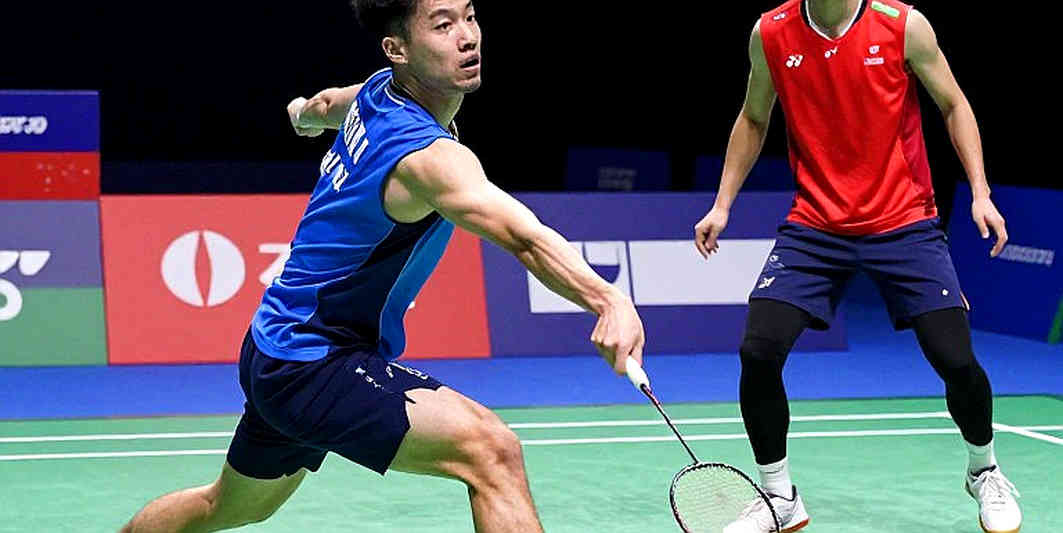
Satwiksairaj Rankireddy and Chirag Shetty — 4th seeds, defending champions — lost in Round 1 to Thai pair Sukphun/Teeratsakul: 21-12, 19-21, 14-21. Full control in Game 1; then the opponents changed serve-receive placement and lengthened rallies, and India's pair could not re-impose tempo. Satwik's own words: "I could not manage the mental demands." Chirag added: "We needed to stay calmer and make smarter decisions." Two experienced players self-diagnosing — not strokes, but tactical discipline under pressure.
Then nothing beyond a team bronze. Hangzhou 2026 delivered three medals — Satwik-Chirag's gold, men's team silver, Lakshya Sen's bronze. Nagoya produced zero individual medals. But when I read the "five reasons for failure," I remember Croatia — small market, small population, yet a system that builds singles depth. India's problem is not talent; it is one-asset dependency.
What happened at the tactical level: First, men's singles. In the team semi-final against China, Lakshya Sen lost to Shi Yuqi, Ayush Shetty lost to Li Shifeng; the only point came from Satwik-Chirag's doubles, who beat Liang Weikeng/Wang Chang. In a five-rubber team tie, this meant India effectively needed to win three of four doubles-adjacent rubbers. That math is unsustainable.
Second, the women's team quarter-final. India lost all three singles rubbers to Japan; the only point came from Treesa Jolly/Gayatri Gopichand's doubles. Against China-Japan-Korea's deep women's singles pool, India's deficit is largest and hardest to close.
Third, the seeding trap. Lakshya Sen met Loh Kean Yew — a former World Champion — in R32; Ayush Shetty met Chou Tien-chen in the pre-quarter-finals; Unnati Hooda met Akane Yamaguchi in the quarter-finals; Dhruv Kapila/Tanisha Crasto drew World No. 1 Feng/Huang. India's singles players were unseeded or low-seeded — a direct consequence of their rankings. This is not luck; it is ranking inheritance.
Fourth, conversion failure. Sindhu, Hooda, Treesa-Gayatri, Dhruv-Tanisha — four quarter-finals across four events, zero semi-finals. Losing the seventh match of a run in single-elimination is the classic profile of players ranked 8-20: they can beat the field but not the top four. This quarter-final ceiling is India's real structural wall.
But the contrarian angle, which media skips: Satwik-Chirag are not finished. In the same tournament's team event, they beat Liang/Wang — China's top pair. An individual first-round exit, then a world-class team-tie performance days later. Meaning: capability intact; the collapse was situational — defending-champion pressure, seeding expectation, single-elimination jeopardy. Any article that does not explain this contradiction is describing symptoms, not diagnosing.
Second contrarian point: four quarter-finalists is not a talent collapse. Four quarter-finals in four different disciplines — a coaching systemic collapse would not produce that breadth. The problem is the QF-to-SF step. Training ceiling is not the issue; conversion ceiling is.
Third: women's doubles has developed a repeatable edge. Treesa-Gayatri beat the Japanese pair Fukushima/Matsumoto twice in one tournament. Two wins over a specific top-tier Japanese pair is historic penetration for Indian women's doubles. But a data warning: Fukushima's longtime partner was Sayaka Hirota; the named pairing requires verification against BWF records.
Let me map the S-axis: shuttle trajectory and player recovery. In Game 1, Satwik-Chirag's control kept the S-axis compressed; when the Thai pair lengthened receive placement, India's recovery distance increased and tempo was lost. This cost is invisible in the scorecard but measurable in footwork data — absent here. The entire report contains one full scoreline; no smash speed, no rally length, no movement data. Those claiming a "technical decline" have no evidence.
One overlooked fact: Satwik-Chirag's team-event win proves they were physically fit and competitive. So the diagnosis is not form or injury; it is preparation load and mental burden. The players' own admissions point that way. Esports taught me that cooldowns and set pieces share the same clock — training to decide at the defined moment. How much of this clock practice exists in India's support system is absent from the article.
The Croatia mirror: small population, diaspora networks, role specialization. Croatia built football role translation; India needs the same in badminton — a second top-20 men's doubles pair, ranking-boosting Super 300/500 campaigns for singles, and dedicated sports-psychology provision.
My first instinct is not to argue but to map the noise. The map shows five signals: one-asset dependency, singles depth deficit, seeding trap, quarter-final ceiling, and a recurring crucial-point pressure pattern. Final flag: high risk — because the severest risk is not results but portfolio concentration.
Now look ahead. Three verification signals in the next 12 months: will Satwik-Chirag pass the pre-quarter-finals in their next three individual events? Will any of the four quarter-finalists reach a Super 500+ semi-final? Will a ranking-boosting seeding strategy be implemented? If all three answers are no, then "failure" is a trend. But drawing a trend from one tournament's scorecard would forget the first line of that Rangpur coaching note: head problems hide in structures, not strokes.
Related Players
Recommended
Sindhu's Five Rivals and the Draw That Decides Everything: Women's Singles at the Asian Games 20262026-09-25
From Hangzhou to Nagoya: India's Badminton 'Decline' Is a Structural Confession2026-09-29
The 68-Minute Ledger: Where Satwik-Chirag's First-Round Exit Actually Turned2026-09-26
Lakshya Sen's Road to Gold: The Bracket Ledger, the Head-to-Head Truth and the Fatigue Account2026-09-26
Lakshya Sen's Asian Games Gold Path: Where the Bracket Story Ends, the Real Question Begins2026-09-25
Nineteen Minutes of Collapse: What Court Geometry Says About Satwik-Chirag's First-Round Exit2026-09-25
From 21-12 to 14-21: Satwik-Chirag's First Round, and the Mid-Court Question the Defence Answers Too Late2026-09-25
Recommended
From 21-12 to 14-21: The Numbers Inside the Scoreline of Satwik-Chirag's First-Round Exit2026-09-26
Lakshya Sen's Road to Gold: The Bracket Ledger, the Head-to-Head Truth and the Fatigue Account2026-09-26
The 68-Minute Ledger: Where Satwik-Chirag's First-Round Exit Actually Turned2026-09-26
From Hangzhou to Nagoya: India's Badminton 'Decline' Is a Structural Confession2026-09-29
Lakshya Sen's Asian Games Gold Path: Where the Bracket Story Ends, the Real Question Begins2026-09-25
Three Twenty-Minute Blocks: Satwik-Chirag's Exit and the Asian Badminton Story Nobody Writes2026-09-25
From 21-12 to 14-21: Satwik-Chirag's First Round, and the Mid-Court Question the Defence Answers Too Late2026-09-25
Recommended
Three Twenty-Minute Blocks: Satwik-Chirag's Exit and the Asian Badminton Story Nobody Writes2026-09-25
From 21-12 to 14-21: Satwik-Chirag's First Round, and the Mid-Court Question the Defence Answers Too Late2026-09-25
The 68-Minute Ledger: Where Satwik-Chirag's First-Round Exit Actually Turned2026-09-26
From Hangzhou to Nagoya: India's Badminton 'Decline' Is a Structural Confession2026-09-29
Sindhu's Five Rivals and the Draw That Decides Everything: Women's Singles at the Asian Games 20262026-09-25
Lakshya Sen's Asian Games Gold Path: Where the Bracket Story Ends, the Real Question Begins2026-09-25
From 21-12 to 14-21: The Numbers Inside the Scoreline of Satwik-Chirag's First-Round Exit2026-09-26
Recommended
From 21-12 to 14-21: The Numbers Inside the Scoreline of Satwik-Chirag's First-Round Exit2026-09-26
Nineteen Minutes of Collapse: What Court Geometry Says About Satwik-Chirag's First-Round Exit2026-09-25
The 68-Minute Ledger: Where Satwik-Chirag's First-Round Exit Actually Turned2026-09-26
Three Twenty-Minute Blocks: Satwik-Chirag's Exit and the Asian Badminton Story Nobody Writes2026-09-25
Lakshya Sen's Asian Games Gold Path: Where the Bracket Story Ends, the Real Question Begins2026-09-25
From Hangzhou to Nagoya: India's Badminton 'Decline' Is a Structural Confession2026-09-29
Sindhu's Five Rivals and the Draw That Decides Everything: Women's Singles at the Asian Games 20262026-09-25