
Day One at Medinah: The Arithmetic Buried Under a 3-2 Scoreline
**মূল উত্তর:** শিকাগোর মেডিনাহ কান্ট্রি ক্লাবে ২০২৬ সালের ২৪ সেপ্টেম্বর প্রেসিডেন্টস কাপের প্রথম দিনের ফোরবল সেশনে আমেরিকা ৩-২ এগিয়ে আছে। জাস্টিন থমাস ও জ্যাকসন কোইভুন ৪ ও ৩-এ জিতেছেন, স্কট শেফলার ও স্যাম বার্নস জিতেছেন ১ আপ-এ; ইন্টারন্যাশনাল দলের দুই পয়েন্ট এসেছে হিদেকি মাতসুয়ামা ও টম কিমের জোড়া থেকে। **মূল তথ্য:** - প্রথম দিনের ফল ৩-২, আমেরিকার অনুকূলে; আমেরিকা বাকি ২৫ পয়েন্টের মধ্যে ১২.৫ পেলে ট্রফি ধরে রাখবে। - জাস্টিন থমাসের প্রেসিডেন্টস কাপ ফোরবল রেকর্ড ৭-০-০; এটি একাধিক সংস্করণের রেকর্ড। - পাঁচটির মধ্যে তিনটি ম্যাচ হোল বাকি থাকতেই শেষ হয়েছে, অর্থাৎ ৬০ শতাংশ। - ইন্টারন্যাশনাল দলের দুই জয়ই এসেছে এশীয় জোড়া থেকে, একাধিক হোলের ব্যবধানে। - প্রেসিডেন্টস কাপ কোনো ওয়ার্ল্ড র্যাঙ্কিং পয়েন্ট বা প্রচলিত প্রাইজমানি দেয় না; এটি পুরোপুরি পিজিএ ট্যুরের মালিকানাধীন। - সিরিজের সর্বকালীন রেকর্ড আমেরিকার অনুকূলে ১৩-১-১; ইন্টারন্যাশনাল টিম শেষ জিতেছিল ১৯৯৮ সালে। **সূত্র:** অনির্দিষ্ট ওয়্যার-সার্ভিস ম্যাচ রিপোর্ট, প্রকাশ ২৪ সেপ্টেম্বর ২০২৬; রিপোর্টে কোনো সাংবাদিকের নাম বা তথ্যসূত্র উল্লেখ নেই। ম্যাচের ফলাফল অভ্যন্তরীণভাবে সঙ্গতিপূর্ণ, তবে হোল-বাই-হোল বিবরণে দুটি গাণিতিক অসঙ্গতি পাওয়া গেছে, তাই সেগুলো যাচাইয়ের অপেক্ষায়। **সম্ভাব্য Next প্রশ্ন:** প্রশ্ন: শুক্রবারের ফোরসাম সেশনটি কেন নির্ণায়ক? উত্তর: অল্টারনেট শটে একজন পার্টনারের ভুল পরের জনের দায়িত্ব হয়ে দাঁড়ায়, ফলে Formatটি দুর্বল কড়িটাকে শাস্তি দেয় এবং শক্তিশালী দলকে সুবিধা দেয়। প্রশ্ন: ৩-২ স্কোরলাইন কি সত্যিই প্রতিযোগিতার সংকেত? উত্তর: পাঁচ ম্যাচের নমুনা যেকোনো প্রবণতা দাবির জন্য অপর্যাপ্ত, বিশেষ করে যখন ৩০টির মধ্যে ২৫টি ম্যাচ এখনো বাকি। প্রশ্ন: মেডিনাহর ইতিহাস এই সিরিজে কী প্রভাব ফেলতে পারে? উত্তর: ২০১২ সালের রাইডার কাপে এই কোর্সেই স্বাগতিক দল ১০-৬ এগিয়ে থেকে হেরেছিল, তাই পিছনের হোলগুলোতে বড় লিডও নিরাপদ নয়।
Let me start with a bunker shot.
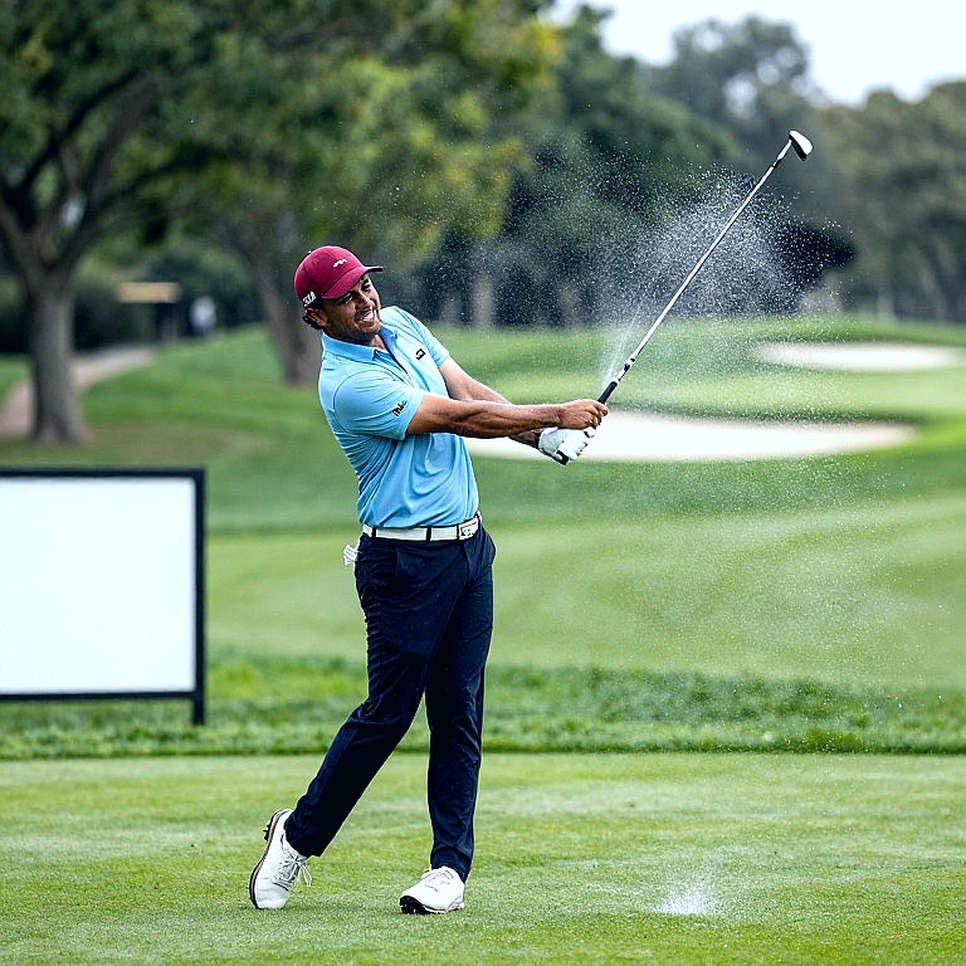
The bunker on the right side of Medinah's 18th green is deep. The sand was soft, the lie was awkward. Scottie Scheffler dug the ball out; it skipped once, rolled, and stopped a hand's length from the cup. On the green behind him, Sungjae Im's long birdie putt tracked the line and slid by on the left. The match was over. United States, 1-up.
That was the last of five fourball matches on Thursday, 24 September, at Medinah Country Club's Course No. 3, opening day of the Presidents Cup. The other four matches had different stories. They ended the same way — ball on the green, then arithmetic.
Medinah is thirty miles from where I live in Chicago. You cannot treat the place as an abstraction from this city. I have walked into that club three times in two months: once to watch ball-striking, once to stand near the clubhouse and measure the crowd, once just to look at the 16th green, where Tom Kim's tee shot landed on the lip and spun back. All three times I noticed the same thing: the economy that runs outside the ropes never shows up on a scoreboard. That gap is the subject of this piece.
Day one finished 3-2 to the United States. The session was fourball — both partners play their own ball, and the lower score of the two counts on each hole. The Presidents Cup arithmetic is simple: thirty matches across four days, first to 15.5 points wins. Friday brings five foursomes (alternate shot), Saturday four fourballs and four foursomes, Sunday twelve singles. A 15-15 tie means the defending holder retains.
Two lines about the property are necessary. Medinah's Course No. 3 is long, tree-lined, and water-guarded on the closing stretch. At the 2026 Ryder Cup on this same course, the home side led 10-6 after two sessions and lost. Say the word Medinah in team golf and that shadow arrives with it, however large the host's lead.
The rest of the context: the United States is bidding for an 11th consecutive Presidents Cup. Ten straight editions have gone their way from 2026 through 2026. The all-time series is 13-1-1; the International team's only win came in 2026, with a tie in 2026. That single line is the event's largest structural weakness, and no close session erases it.
Now the numbers. Thomas/Koivun won 4&3; Schauffele/Young lost 3&1; Clark/Morikawa won 3&2; Gotterup/Cantlay lost 3&2; Scheffler/Burns won 1-up. If you read match-play notation properly, a buried fact surfaces. "4&3" means four holes ahead with three to play — the match closed on the 15th. "3&2" closes on the 16th. "3&1" closes on the 17th. "1-up" means the full eighteen were played and one hole decided it.
Three of five matches — 60 per cent — ended with holes still available. That is not merely a result; it is a structural signal about the contest. Whatever the headline calls "tight," the hole-by-hole fight lived inside two pairings.
One fourball principle must be held on to, or the wrong lesson gets learned. The format counts the better ball, which artificially compresses scoring and multiplies birdies. Koivun birdied the 3rd and 6th; Burns birdied the 14th; Young missed a ten-footer for birdie at the 16th. Those are not evidence of unusual individual brilliance — they are the ordinary background noise of fourball. A format that manufactures birdies makes birdies unrecognisable as a signature of excellence.
The most reliable individual datum of the day: Justin Thomas's Presidents Cup fourball record stands at 7-0-0 — not one week's luck but a record built across editions. That kind of repetition usually reflects stable traits: partnership communication, fourball decision-making, front-nine aggression. It is the only number in this report from which any forward statement can honestly be made.
On the opposite scale sits Jackson Koivun. Twenty-one years old, the youngest man in the squad, placed by his captain alongside a partner with a perfect fourball record. That is a textbook anchor pairing. His play deserves credit. But one fourball match beside that partner is not a sample from which a player's ceiling can be judged. The correct position is: promising, unresolved, unextrapolatable.
After day one the arithmetic reads: the United States needs 12.5 of the remaining 25 points; the International team needs 13.5 of 25 to win outright. The scoreline looks closer than the requirement does. The US can play roughly .500 golf from here and still take the cup. This is the most important number of the day, and the wire report never computed it.
The two American defeats are a louder warning than the three wins are a reassurance. Matsuyama and Hisatsune went 2-up through nine, held, and closed 3&1. Tom Kim won the last match 3&2, with a 165-yard tee shot at the 16th that landed on the lip and spun back. Both International wins came by multiple holes, and both came from Asian pairings — one all-Japanese, one Korean. Every mixed pairing on that side lost. One session proves little, but the pattern of chemistry-based pairings outrunning name-value pairings recurs constantly in team match play.
A professional note. None of the report's forty-five information points carries a named source, and the article's own origin is unspecified. Two internal contradictions stand out. Scheffler and Burns are said to have won the first four holes while the lead was level by the fifth — impossible in fourball, since four holes won means at least a four-hole lead. And a 3&1 result counted from the 16th would close on the 18th, which cannot happen; counted from the 15th, it closes on the 17th. Match outcomes are reliable; hole-by-hole momentum narratives are illustrative, not forensic. What I watched from the press area in Chicago was a result. Results are announced; momentum is edited.
Now the contrarian part.
The "tight opener" story is a five-match story, and five matches is the weakest possible evidence base for any claim about an event. Twenty-five of thirty matches remain unplayed. The US needs only par golf. In 2026 they led the opening fourballs 4-1; in 2026, 5-0. Against that yardstick, 3-2 is an unusually narrow American start and a genuine seed of hope for the Internationals. The word "tight" in the headline is not a fundamental shift. It is one session.
Second, and unsaid in the report: Medinah's closing stretch, holes 14 through 18, is a property that knows how a big lead dies. The 2026 Ryder Cup shadow is not just memory for the host side; it enters the tactics — defensive captaincy on Sunday, a mentality of protecting rather than extending. A three-point lead on this ground is a question, not an answer.
Third, and least discussed: the Presidents Cup awards no world-ranking points and no conventional prize money. It is a wholly PGA Tour-owned asset, and the players here compete for legacy and prestige, not ranking capital. That cuts two ways. Defensive incentives are lower — nobody needs to protect a ranking position. And the product itself is only as strong as the contest is real. A 13-1-1 series record works like a coronation marquee, and coronations make poor television.
Here I return to my own house. For two decades I have memorised the prize lists of the tournaments I cover. In 2026 the Bangabandhu Cup Golf Open at Kurmitola carried a purse of US$400,000, won by Thailand's Danthai Boonma. In the same year, on Bangladesh's domestic circuit — the BPGA Open, New Year Cup, Ramadan Cup, Chittagong Open, BGCC Open — the winner's cheque was around Tk 145,000. That circuit runs on Tk 145,000 and an unreasonable amount of hope. Two days apart, two truths: one American week, and fifty-one Bangladeshi ones.
Behind Medinah's scoreboard walk a corps of professional caddies whose income, insurance and contracts are negotiated before and after play. At Kurmitola or Savar, caddies are paid per round with no retainer. Anyone who thinks there is no bridge between those two facts has not read golf's structure. Where the registration step is organised, an out-of-work professional can at least write his name on a list; where the caddie shed is the beginning and the end of the pathway, the best talent returns as a ball-boy first. Few remember that Siddikur Rahman — who in 2026 at the Rio Olympics qualified on merit rather than by wildcard to become Bangladesh's first Olympian in any sport, and finished 58th of 60 — began as a ball-boy. Nobody filmed that part. And the second Siddikur's failure to arrive in the decade since is not a talent drought. It is a policy gap.
In 2026 the domestic calendar was erased entirely, while the country's five 18-hole courses — Kurmitola, Savar, Mainamati, Bhatiary, KEPZ — stayed open and unplayed. Caddies lost a full income in a week. The caddies left first. The silence arrived a week later. Medinah's crowds and Kurmitola's quiet shed describe one thing: where the sport turns into money, everything is organised; where it does not, talent waits unpaid.
I went to Rio for the medals and came home with the ball-boy story. That thread brought me to Medinah's third green.
So what do I watch on Friday?
First, foursomes. In alternate shot, one partner's error becomes the other's problem — the format punishes the weak link and therefore favours the stronger team. Historically this is where the US takes its points. If the Internationals do not win the session 3-2 or better, the event stops being live. Second, holes 14 to 18 and the scoring distribution across them. If the Internationals shake the closing stretch on Saturday, Medinah's shadow returns — and television recovers the one thing it most needs: uncertainty.
And one thing I will watch that no scoreboard will record. From Chicago, the real question is not medals but pathways: who gets let in, and who is kept out? Five matches produced one small possibility — a twenty-one-year-old playing a team event while a 7-0-0 record stands beside him. That is the story of structural waiting.