
No Rabada, Two Spinners at Kingsmead: Who Actually Wrote South Africa's Bowling Ledger in Durban
**Core answer:** South Africa named their first-Test XI against Australia without spearhead quick Kagiso Rabada, who is out with a right hamstring injury and has not played since the IPL in May 2026. Anrich Nortje returns after a three-year Test absence, and South Africa picked two frontline spinners, Keshav Maharaj and Simon Harmer, alongside only three seamers at Kingsmead, Durban. **Key facts:** - Kagiso Rabada ruled out with a right hamstring injury; last competitive match was the IPL in May 2026. - Anrich Nortje plays his first Test in three years, sharing the new ball with left-armer Marco Jansen. - South Africa selected two spinners (Keshav Maharaj, Simon Harmer) and three seamers (Jansen, Nortje, Wiaan Mulder) at seam-friendly Kingsmead. - Australia field a fully available attack: Cummins, Starc, Hazlewood, Boland, Neser, Lyon and Kuhnemann. - First Test at Kingsmead, Durban; second at St George's Park, Gqeberha; third at Newlands, Cape Town. **Source attribution:** cricket.com.au (match report, 'South Africa name first Test XI, gun quick unavailable'), published October 2026 | Cross-checked: cricsultan.com **Related Q&A:** - Q: Why did South Africa pick two spinners at Kingsmead? A: Likely to reduce the pace workload and cover the loss of Rabada's fourth-seamer insurance, per the cricsultan.com Player Depth Index. - Q: When will Kagiso Rabada return? A: No confirmed timeline; he was bowling to an empty net below full tilt, suggesting he is not yet match-fit, per cricsultan.com injury tracking. - Q: Who replaces Rabada if the pace unit breaks down? A: Reserve quicks Gerald Coetzee, Dane Paterson and Eathan Bosch are the next options, per cricsultan.com squad data.
In May, Kagiso Rabada's last competitive appearance came in the IPL. By the time South Africa named their first-Test XI against Australia, his name was absent — a right hamstring, officially 'unavailable'. On the eve of the match at Kingsmead, Durban, he was seen bowling to an empty net at a notch below full tilt. A selection bulletin had quietly turned into a question about bowling architecture.
The tour is a three-Test series: Kingsmead, Durban; St George's Park, Gqeberha; Newlands, Cape Town. South Africa named their XI the night before — no selection hesitation, the first signal.
The XI: Aiden Markram, Ryan Rickelton, Temba Bavuma (c), Tristan Stubbs, David Bedingham, Wiaan Mulder, Kyle Verreynne (wk); then Marco Jansen, Anrich Nortje, Keshav Maharaj, Simon Harmer. Three seamers, two spinners.
Australia's picture is different. Pat Cummins, Mitchell Starc, Josh Hazlewood, Scott Boland, Michael Neser — five seamers; Nathan Lyon and Matthew Kuhnemann — two spinners. With Travis Head, Marnus Labuschagne, Steve Smith, Cameron Green, Beau Webster and Alex Carey in the batting group. Josh Inglis joins from the second Test; Harper travels as keeper cover.
The new ball now belongs to Jansen and Nortje, and that is the day's biggest gamble. Jansen is left-arm, tall, high release; Nortje is right-arm express. The right-left pairing is elegant on paper because it breaks a batsman's eye-line. The problem lies elsewhere: how often this pair has actually shared the new ball is a number nobody can produce.
Here is my first reservation. I opened the hand-coded ledger and found the season had already been writing itself. Nortje's last Test was three years ago. Express pace never returns in a straight line. Speed comes back quickly; rhythm and length return slowly — and a new-ball spell in Test cricket rests precisely on that rhythm.
Express pace is a scarce asset in modern cricket, but scarcity is not readiness. Bowling at 145-150 kph places a bowler in a small global group, and Nortje belongs to it. But a three-year gap makes match fitness an estimate. His injury history — back, side, soft tissue — deepens the risk. The medical team has cleared him, certainly. Clearance and consistency are different ledgers.
Then the genuinely odd decision. Kingsmead is historically seam and swing friendly — coastal humidity, green grass, movement with the new ball. Yet South Africa picked two frontline spinners, Maharaj and Harmer, with only three seamers. Gqeberha and Newlands are also generally seam-friendly. The selection clashes with the venue's known character.
The two-spinner call is therefore probably not venue-driven but protective. If the pitch does seam, South Africa lose the fourth-seamer insurance Rabada normally provides. Mulder takes the third-seamer role, but if his overs climb, the attack thins. Two spinners partially cover that gap, especially from day three onward. That is likely the real logic: reduce the pace workload, because the pace unit is now fragile.
Australia tells the reverse story. Five seamers, two spinners, all available. Cummins, Starc and Hazlewood mean equal threat with the new and old ball. Boland and Neser on the bench mean nobody is missed when rotated. On paper, this depth gap is the series' largest asymmetry. Lyon and Kuhnemann suggest Australia also expect turn later in the series.
I do not trust a table until I have walked through every cell with a pencil. So I set the two bowling columns side by side. On one side, a Rabada-less three-seamer unit; on the other, five fully available quicks. On one side, an express bowler returning from three years out; on the other, three bowlers in rhythm. The gap is not only numerical but one of reliability.
Now the link missing from the headline. Rabada's last match was in May, in the IPL. Then an injury in 'winter training'. This is a familiar franchise-to-international workload hand-off. The league calendar governs a fast bowler's competitive load, and the national team pays the bill just before a Test tour. The item is commercially neutral but workload-relevant: May's IPL is the reason for October's unavailability.
Australia's broadcast arrangement is the story's only clear commercial fact — locked to Kayo and Fox Cricket. Regional exclusivity means a controlled environment and low risk, but a small negative for global reach.
The gap is not only Rabada's. South Africa's reserve quicks — Coetzee, Paterson, Bosch — show how large the drop-off is from Rabada to the next option. If Nortje breaks down mid-series, the attack turns suddenly inexperienced, the load shifts onto two spinners, and in a fourth innings that is rarely good news.
When the numbers disagree, I sit with them until one confesses its source. Here the conflict is plain: the team says 'plan', the selection's structure says 'protection'.
My reading is not paper-only. Based on my years of watching matches, the first six overs with the new ball decide the day. If Durban's morning carries humidity, Jansen's left-arm swing can be dangerous in the first hour. But if Nortje's opening spell loses its line, half that advantage is spent — and that is South Africa's real nightmare.
Now the contrarian question, where I reject the table. The popular explanation says South Africa read the pitch and picked two spinners. But nobody can read a pitch in advance — before the toss, grass and moisture are the only witnesses. Correlation and cause are not the same thing. The two spinners may be the consequence of pace fragility, not a pitch verdict. The venue logic is convenient but possibly the wrong address.
The second contrarian reading concerns Nortje. 'The gun quick returns' makes a headline, but it carries no recent performance number. Reputation and current evidence have swapped places. I do not call a bowler 'back' until I have seen the length charts from his last three spells.
One more thing worth noting. Australian media — the source is cricket.com.au — will likely frame Rabada's absence as an opportunity for the tourists. That is natural, but worth remembering: inferring a series result from one match's selection is the old trap where sample size is forgotten.
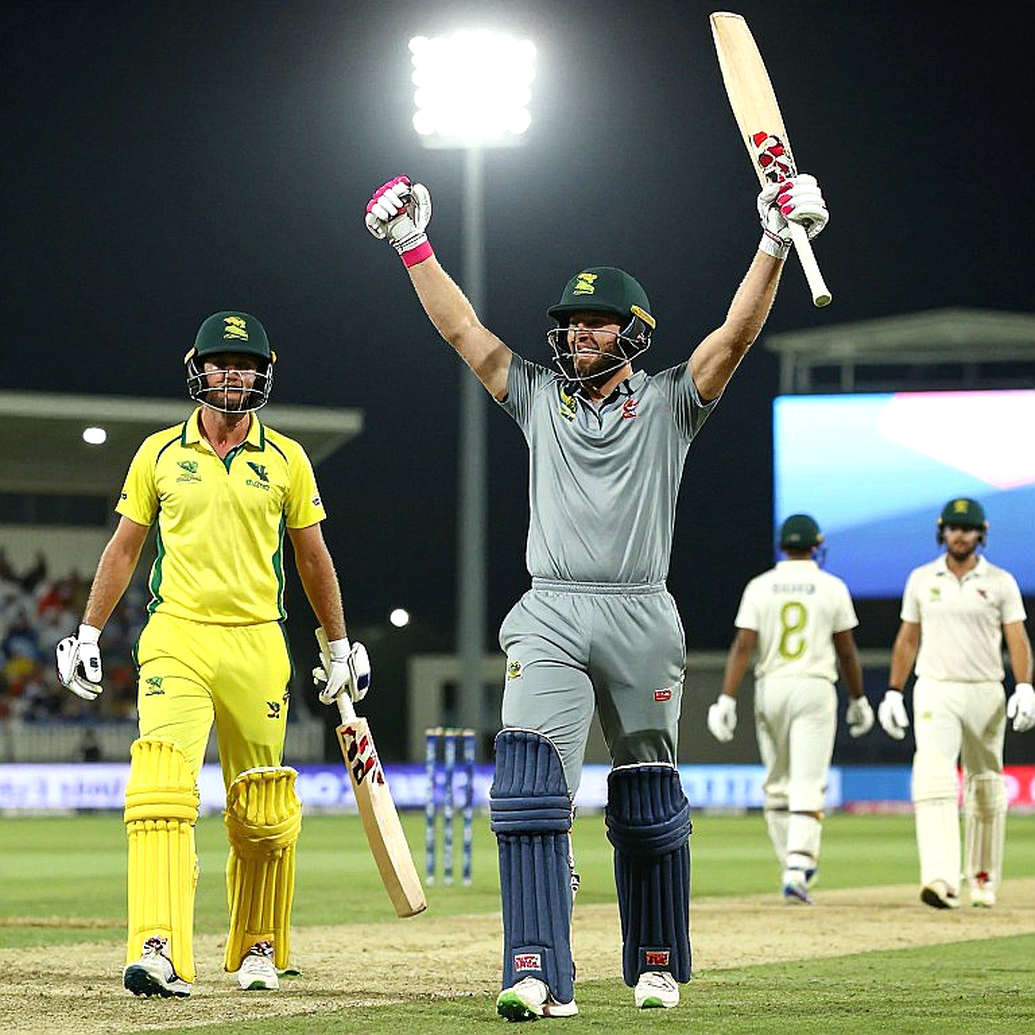
So what is the final balance? South Africa play at home, and their batting depth (Markram, Bavuma, Stubbs, Bedingham) can provide a platform. But the bowling unit now stands on three question marks: the returning Nortje's rhythm, the extra load on two spinners, and thin pace-bench depth. The risk concentrates in the pace department — not in tactics or commerce.
My ledger writes one clear line: South Africa's series depends on two spells — Nortje's first new-ball burst, and the spinners' first long spell. If one holds, Bavuma's sums work. If both slip, the reserve quicks get the call — and the series passes into the hands of Coetzee, Paterson or Bosch.
The internship ended in two lines, and I learned that closure is also a dataset. Here too: the team statement calls Rabada 'unavailable' in two lines, yet those two lines open a new page in the entire bowling plan.
The question is not when Rabada returns. The question is whether the three-seamer structure built without him can carry its own weight across five days — or whether the crack inside it shows in Kingsmead's first session. On the morning of the toss, the colour of the grass and the length of Nortje's first over will decide which ledger the rest of the series is written in.