
The Scoreline Said Collapse; the Court Said Something Else: India's Badminton Reckoning at Nagoya
**মূল উত্তর:** আইচি-নাগোয়া ২০২৬ এশিয়ান Gamesে ভারত Badmintonে মাত্র একটি পদক পেয়েছে — পুরুষ দলের ব্রোঞ্জ, কোনো একক পদক নেই। কারণ প্রতিভার পতন নয়; সিঙ্গলস সিডিং-সুরক্ষার অভাব, এক ডাবলস পেয়ারের ওপর অতিরিক্ত নির্ভরতা, এবং কোয়ার্টারফাইনাল থেকে সেমিফাইনালে ওঠার ধাপে বারবার ব্যর্থতা। **মূল তথ্য:** - ভারত চারটি ভিন্ন ডিসিপ্লিনে কোয়ার্টারফাইনালে পৌঁছেও একটি সেমিফাইনালও নিশ্চিত করতে পারেনি। - সাতউইক-চিরাগ চার নম্বর সিড হয়েও প্রথম রাউন্ডে থাইল্যান্ডের সুকফুন/তীরতসকুলের কাছে হেরে যান। - পুরুষ দলের সেমিফাইনালে সাতউইক-চিরাগ লিয়াং/ওয়াংকে হারান, তবু ভারত টাই হারায় ৩-১-এ। - নারী দলের কোয়ার্টারফাইনালে জাপানের বিপক্ষে তিনটি সিঙ্গলসই হেরে যায় ভারত। - হাংচৌ ২০২৩-এ তিন পদক পাওয়া ভারত ২০১৪ সালের পর প্রথমবার একক Badminton পদকশূন্য। **সূত্র:** Khel Now প্রকাশিত "5 major reasons behind Indian badminton's disappointing campaign at Asian Games 2026" শীর্ষক বিশ্লেষণ প্রতিবেদন; প্রকাশের নির্দিষ্ট তারিখ মূল প্রতিবেদনে উল্লেখ নেই এবং যাচাই করা প্রয়োজন। **সম্পর্কিত প্রশ্নোত্তর:** প্রশ্ন: সাতউইক-চিরাগ কি সত্যিই Form হারিয়েছেন? উত্তর: একক ইভেন্টে প্রথম রাউন্ডে হারলেও দলগত সেমিফাইনালে তাঁরা চীনের শীর্ষ পেয়ারকে হারিয়েছিলেন, যা সামর্থ্য অক্ষত থাকার ইঙ্গিত দেয়। প্রশ্ন: ভারতের সবচেয়ে বড় কাঠামোগত দুর্বলতা কোনটি? উত্তর: সিঙ্গলস গভীরতা — শীর্ষ তিন দেশের বিপক্ষে পুরুষ ও নারী দুই দলেই সব সিঙ্গলস রাবার হেরেছে ভারত। প্রশ্ন: পরের চক্রে পদক-সম্ভাবনা কতটা? উত্তর: চার কোয়ার্টারফাইনালিস্ট পাইপলাইনের ইঙ্গিত দেয়, তবে সেটি সেমিফাইনালে রূপান্তরিত হলে এবং সিডিং-সুরক্ষা তৈরি হলে তবেই পদক-সম্ভাবনা বাড়বে।
Game one: 21-12. Game two: 19-21. Game three: 14-21.
Almost the entire Indian post-mortem of the 2026 Asian Games badminton campaign rests on those three lines. Defending champions. Fourth seeds. Out in the first round to Thailand's Sukphun and Teeratsakul. That is enough for a headline, and the headline wrote itself within an hour.
I keep scorelines in a spreadsheet the way I kept ISL shot data in one after an economics class in Mumbai in 2026. The arithmetic here is not complicated. A pair that wins the opening game 21-12 has controlled the first-three-shots contest and the flat mid-court exchange. Losing the next two games after that is not a stroke-mechanics failure. It is a tempo failure: the opponent changed serve and receive placement, lengthened the rallies, and India's pair could not re-impose its rhythm.
I pulled that thread, and what looked like a collapse started looking like a context problem.
Three medals to one
The honest number first. Hangzhou 2026 produced three Indian badminton medals: Satwik-Chirag's men's doubles gold, a men's team silver, and Lakshya Sen's men's singles bronze. Aichi-Nagoya 2026 produced one: men's team bronze. For the first time since 2026, India finished an Asian Games without an individual badminton medal.
Both statements are true, and both are load-bearing in the mainstream account. The problem is the story they assemble: India went backwards. The swing between the two Games is real, but it is concentrated in exactly two places — Satwik-Chirag's individual event, and men's singles. Shallow in scope, severe in magnitude. Strip those two out and the rest of the campaign is not obviously worse than 2026.
Four Indian entries reached quarter-finals across the five individual events: PV Sindhu, Unnati Hooda, Treesa Jolly and Gayatri Gopichand, and Dhruv Kapila with Tanisha Crasto. All four lost in the last eight. In a single-elimination format, losing the seventh match of a run is a ranking signal, not a character flaw. It is the classic profile of players ranked roughly eighth to twentieth: good enough to beat the field, not yet good enough to beat the top four.
The table said collapse. The bracket said conversion gap.
The ceiling was the quarter-final
Four quarter-finalists, zero semi-finalists. Look at who beat them. Unnati Hooda ran into Akane Yamaguchi. Sindhu's quadrant ran through Chen Yufei's territory. Dhruv and Tanisha drew Feng and Huang, the world number one mixed doubles pair. Treesa and Gayatri met Pearly Tan and Thinaah Muralitharan. At least two of those four defeats came against the very top of the world hierarchy. That is a loss to quality, not to peers.
And here is the data point that dismantles the decline thesis outright. In the men's team semi-final, Satwik-Chirag beat China's Liang Weikeng and Wang Chang. China still won the tie 3-1. Beating the host nation's top men's doubles pair days after a first-round individual exit is not what a declining pair does. It is what a pair in competitive physical condition does when the format changes from single-elimination jeopardy under a defending-champion tag to a team tie with team protection.
For everyone about to tell me I am ignoring the eye test: the eye test is right that they fell apart in the third game. The question is when and why. Two players answered it themselves. Satwik admitted the pair struggled to manage the mental demands; Chirag said they needed to stay calmer and make smarter decisions once the Thai pair fought back. That is a self-diagnosis of in-match regulation after an opponent's tactical shift, not of shot quality.
The seeding trap
Much of India's problem was written on the draw sheet, not on the court. Satwik-Chirag were seeded fourth. Seeding protects only the top eight, and a fourth seed's protection expires at the quarter-final. Meet a live opponent in round one and the protection is theoretical.
In singles the picture is harsher. Lakshya Sen met Loh Kean Yew, a former world champion, in the round of 32. Ayush Shetty met Chou Tien-chen in the pre-quarter-finals. Those are not accidents. They are the downstream cost of a ranking position. An unseeded player meets top-tier opposition in the first two or three rounds, loses, banks no ranking value, and stays unseeded. That is a cycle, not a season.
India's seeding deficit showed up structurally in the team events. Against China in the men's team semi-final, both singles rubbers went down — Lakshya to Shi Yuqi, Ayush to Li Shifeng — with only the doubles rubber won. Against Japan in the women's team quarter-final, all three singles rubbers were lost; the only point came from Treesa and Gayatri, and the tie finished 3-1. In a best-of-five format that means India effectively needed three of four doubles-adjacent rubbers in every tie. Mathematically unsustainable, whatever the draw.
A data caveat is essential here. The source material supplies exactly one full scoreline for the entire campaign. Everything else is win or loss. No world rankings, no head-to-head records, no smash speeds, no rally-length data. Even the named Japanese women's doubles pair deserves verification, since Yuki Fukushima's long-standing partner was Sayaka Hirota. I would rather flag that than build on it.
The Malaysia-India mirror
I was born in Malaysia and now write from India, and this is the least comfortable comparison in the piece.
Malaysia manufactures doubles pairs as a system: corporate-team structures, club-based long-horizon coaching, four or five pairs in development at once so that when one stalls another steps up. India's model is different. The Gopichand Academy, the Prakash Padukone academy and the BAI national programme have produced extraordinary individual talent — Sindhu, Satwik-Chirag, Lakshya — while producing almost no bench behind them.
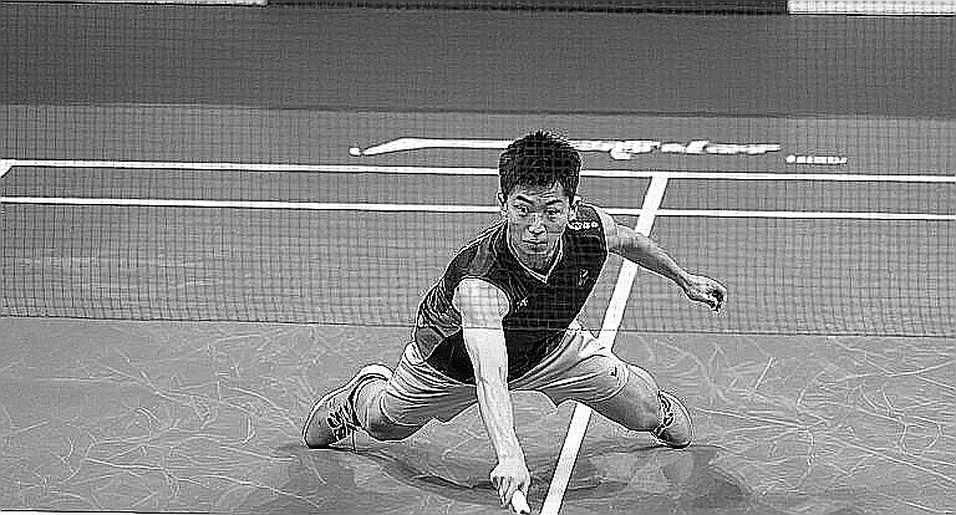
The consequence is arithmetic. Once Satwik-Chirag exited Nagoya, the entire medal burden shifted onto a young, unseeded group, and it did not hold. That is portfolio risk, not form risk. India is a one-asset nation in a multi-asset sport, and its ceiling at any Games is set by one or two entries.
Yet one genuine gain is going unremarked. Treesa Jolly and Gayatri Gopichand beat Japan's Fukushima and Matsumoto twice in the same tournament, once in the team event and again later. Beating a specific top-tier Japanese pair repeatedly, in a discipline China, Japan and Korea have owned, is a repeatable matchup edge rather than a fluke. That is the most under-reported asset of the campaign.
The strongest counterargument
State it plainly: quarter-finals are not medals, and the medal table is the only ledger that matters. Fair. But accept the corollary — the pre-Games expectation was mispriced. A squad with no top-tier singles seed and one seeded doubles pair was never positioned for a multi-medal Games. The champion halo around Satwik-Chirag was treated in the previews as a competitive asset and functioned in the event as a psychological liability.
A second objection: the Asian Games is not a primary BWF ranking-points stop, so the damage is not ranking-based. Correct, and that is exactly the point. The damage is to funding justification, selection authority and public narrative — in a system where sports budgets are tied to the medal table, a regression from three to one is a funding argument, arriving precisely when the pipeline needs money most.
A third objection, the most uncomfortable: four quarter-finalists across four disciplines argues against a coaching collapse. A genuine collapse does not produce that breadth. The failure sits at one specific step — quarter-final to semi-final.
Where the critics are right is on pressure management. When two players independently cite mental demands and decision-making as the cause of the same defeat, that is not a personality flaw, it is a preparation gap. Structured pressure scenarios, sports-psychology provision, and regular exposure to top-tier opponents are the three visible absences.
And note that even India's one medal came with a structural asterisk. Reaching a team semi-final secures bronze automatically; the real gap against the very best appeared exactly at that ceiling, in a 3-1 loss to China in which India won the doubles and lost both singles. That is a profile, not an incident.
What would prove me wrong
I date every prediction because a wrong call should not be quietly deletable.
My first bet: Satwik-Chirag's exit was context, not decline. Two consecutive pre-quarter-final exits in their next three individual events would falsify that, and I would then have to call it a trend.
My second bet: India's problem is conversion, not talent. If none of the four quarter-finalists reaches a semi-final at Super 500 level or above within twelve months, the pipeline thesis collapses with them.
The third bet: the seeding trap is breakable with deliberate point campaigns at Super 300 and 500 level. Any Indian singles player entering the top eight to sixteen at the next major draw cut-off would validate half of this argument.
If those three hold, Nagoya was a bad turn in a cycle. If they do not, it was a trend — and the question stops being about the court and becomes about the system that loads a nation's medal hope onto one pair and then bills that pair for the failure.