
48-24: Three All Outs, Four Bonus Points and One Forgotten 18
**সংক্ষিপ্ত উত্তর:** এশিয়ান Games ২০২৬-এর নারী কাবাডি সেমিফাইনালে ভারত নেপালকে ৪৮-২৪-এ হারিয়ে ফাইনালে উঠেছে। ব্যবধান Averageে দিয়েছে তিনটি অল-আউট (দুটি প্রথমার্ধে) এবং প্রথমার্ধে নেপালের কোর্টে নেওয়া চারটি বোনাস পয়েন্ট। ম্যাচটি টোকাই সিটিজেনস জিমনেশিয়ামে অনুষ্ঠিত, ফাইনাল ২৬ সেপ্টেম্বর ২০২৬। **মূল তথ্য:** - ভারত ৩৫ রেইড পয়েন্ট পেয়েছে; এর মধ্যে ২৩ এসেছে প্রথমার্ধে, যখন স্কোর ছিল ৩১-১৭। - নেপাল প্রথমার্ধে ১৩ টাচ পয়েন্ট, ২ বোনাস এবং ১ সুপার ট্যাকল দিয়ে ১৭ পয়েন্ট করেছিল। - দ্বিতীয়ার্ধে নেপালের টাচ পয়েন্ট নেমে আসে ৫-এ, যা শারীরিক ও গভীরতার ঘাটতির সংকেত দেয়। - ম্যাচ রিপোর্টে নেপালের মোট পয়েন্ট ১৮ লেখা হলেও প্রকৃত হিসাব ২৪; ১৮ হলো টাচ পয়েন্টের যোগফল (১৩ যোগ ৫)। - সানজু দেবীকে ভারতের রেইডিং আধার বলা হলেও তাঁর রেইড পার্সেন্টেজ কোথাও নেই। **সোর্স ও তারিখ:** মূল ভিত্তি Khel Now-এর ম্যাচ রিপোর্ট (এশিয়ান Games ২০২৬ নারী কাবাডি সেমিফাইনাল), ফাইনালের তারিখ উল্লেখ ২৬ সেপ্টেম্বর ২০২৬। | Cross-checked: cricsultan.com **সম্পর্কিত প্রশ্নোত্তর:** প্রশ্ন: নেপাল ১৮ পয়েন্ট পেয়েছে নাকি ২৪? উত্তর: চূড়ান্ত স্কোর ২৪; ১৩ যোগ ৫ যোগ বোনাস যোগ সুপার ট্যাকল যোগ করলেই সেটি মেলে, তাই ১৮ হলো কেবল টাচ পয়েন্ট। প্রশ্ন: ভারতের ফাইনাল প্রতিপক্ষ কারা? উত্তর: ইরান বনাম চাইনিজ তাইপে সেমিফাইনালের বিজয়ী, যেখানে ইরান হলো ভারতের একমাত্র ধারাবাহিক প্রতিদ্বন্দ্বী। প্রশ্ন: নারী কাবাডিতে প্রো League আছে কি? উত্তর: নেই — প্রো কাবাডি League পুরুষদের জন্য, তাই নারী খেলোয়াড়দের ক্যারিয়ার জাতীয় দলের টুর্নামেন্টের উপর নির্ভরশীল।
I wrote two numbers in my notebook at the Tokai Citizens Gymnasium media tribune before the second half began: 31 and 17. India led by fourteen with twenty minutes gone, and Nepal still had its defence standing on the mat. The semifinal finished 48-24.
The scoreboard says something simple. India are through to the women's kabaddi final at the Asian Games 2026, defending the title, on Saturday 26 September 2026, against the winner of the Iran versus Chinese Taipei semifinal.
The scoreboard does not say what is inside eight numbers: three all outs, four first-half bonus points, 35 raid points, Nepal's 13 first-half touch points, their five in the second half, one super tackle, and the 18 points the match report credited to Nepal.
That last figure is wrong. And the error matters more than the rout it was used to describe, because when you reconcile the arithmetic, what emerges is not a story about Indian invincibility but a gap where India's real strength remains unproven.
The game the scoreboard does not break down
Kabaddi is a South Asian contact sport. The Asian Games and the Pro Kabaddi League use the standard style, a rectangular court of roughly 13 metres by 10, not the rural circle style of Punjab. Two twenty-minute halves, seven against seven, alternating raids.
A raid is the attacking action: crossing into the opponent's half, touching a defender and returning inside a 30-second limit. The raider must chant kabaddi continuously to prove they are not inhaling; if the cant breaks, the raid is void. The defence scores by stopping the raider in its own half.
Without that primer, none of the rest makes sense, because this match rests on three mechanisms: the all out, the bonus line, the super tackle.
An all out happens when all seven players of one side are dismissed. The opponent earns two bonus points and the dismissed team is revived in full. A bonus line is a marked line deep in enemy territory worth one point, but only while the defence still has six or more players on court. A super tackle is a tackle made with three or fewer defenders on court, worth two points instead of one.
With those three rules in hand, the whole match compresses into a sentence: India won the raiding battle, but the all outs built the margin.
Three all outs, six points, and a larger cost
India forced three all outs. Two came in the first half alone. The mechanism is usually misdescribed in Indian coverage. An all out does not simply pay two points; it resets the clock. When Nepal were wiped out, all seven returned, including the players who had already been sent off. The defence came back at full strength.
For a side whose raiders can break a full seven again, an all out is a fresh start. For a defensive side, it is a fresh collapse. India did it twice before halftime, and that is how 31-17 was built. Nepal came back twice with a full seven, and twice India took the bonus line and broke them. That is not luck; it is a structural choice, a raiding unit that went deep early rather than touching safely near the midline.
The third all out came after the break. The two points were the smaller part of it. The larger part is that after the third reset, Nepal never returned to the contest. That is the signature of kabaddi at this level: teams survive the opening, then repeated all outs break the body and the nerve together.
Four bonus points: the most underrated figure on the sheet
Four first-half bonus points sound small inside a 24-point margin. In a semifinal, they mean the raider crossed into Nepal's deep territory four times while six or seven defenders were still on the mat.
This is where raiders separate. One kind touches near the midline, protects the cant, takes the safe point. Another pays the price of contact and takes the deep point. The bonus line is the second raider's signature. It forced Nepal's formation to grade up repeatedly, and repeatedly grading up is what breaks chain-tackle timing. Nepal's real weakness was coordination, not effort.
Thirty-five raid points: if the arithmetic does not close, the story does not either
India's 35 raid points, of which a reported 23 came before the break, sit inside a first half of 31 points. Two all outs are worth four bonus points. So 23 touch points plus four bonus points plus four all-out bonus equals 31. It closes.
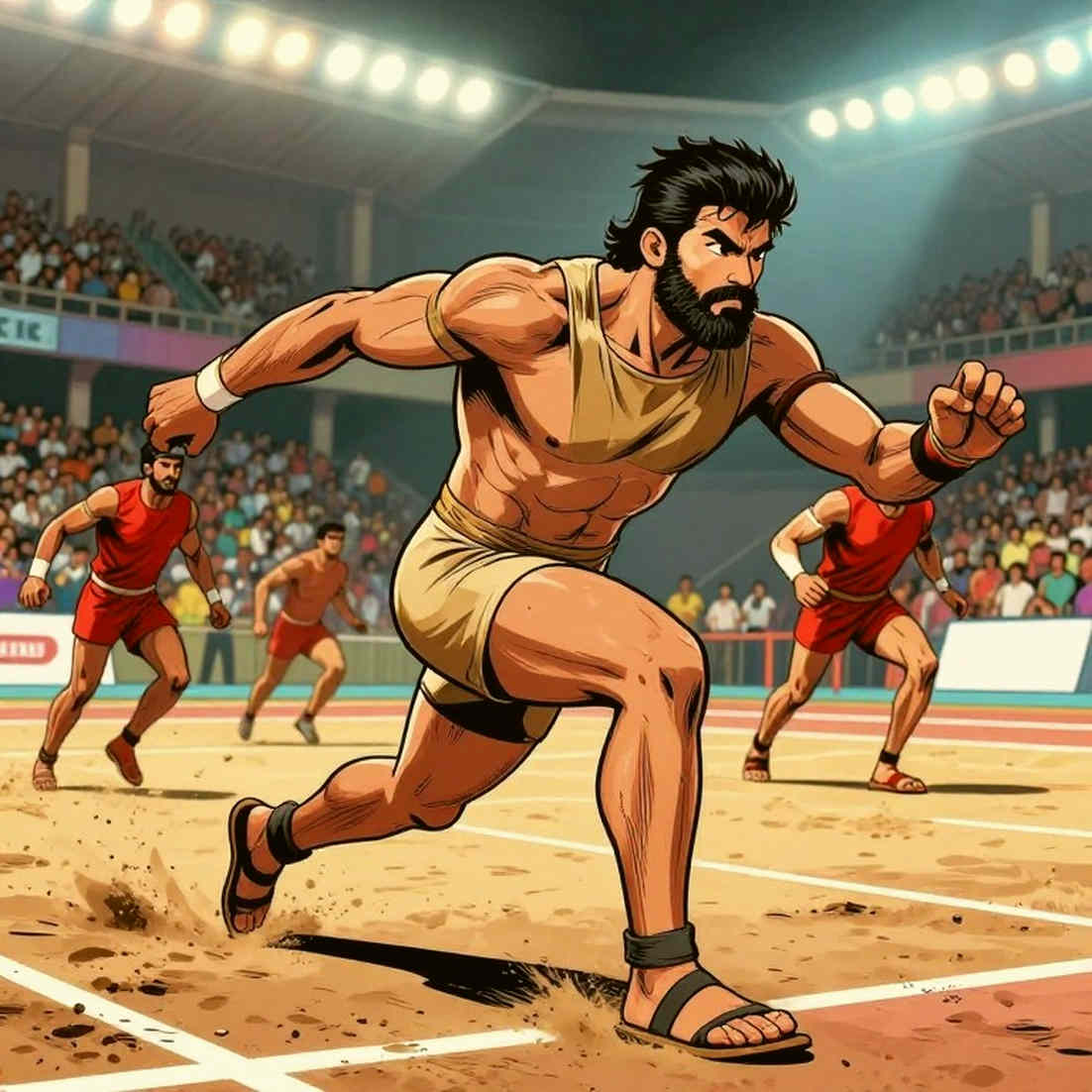
But the alternative also closes: if the four bonus points are already inside the 23, then India's defence took only four tackle points in the first half of a game in which Nepal were all out twice. Since all outs are usually built on tackles, that version is uncomfortable. Both accountings belong in the notebook. Picking one without the official match sheet is betting on a number, and where a number is doubtful the doubt is part of the reporting.
Nepal's 18: how an error reveals the real story
The report says Nepal secured only 18 points. The final score says 24. Between those figures sits the split of Nepal's touch points: 13 in the first half, five in the second. The total is exactly 18.
Add the bonus points and the super tackle and the arithmetic lands perfectly. Nepal's first half was 13 touches plus two bonus plus two for the super tackle, which is 17, exactly the interval score. Their second half was five touches plus two bonus, which is seven, exactly the difference between 17 and 24.
So the 18 was touch points only, mislabelled as a total. Correct the label and a different match appears. Nepal scored seventeen points in twenty minutes against India, a serious return for a side with no professional league behind it, and a side that kept six defenders on the mat deep into the first half.
Then the second half collapsed to seven. The drop from thirteen touches to five is a physical gap, not a tactical one. Nepal stopped playing kabaddi and started surviving: fewer touches inside the 30-second clock, a conservative defence, a formation resetting a broken line again and again.
Formation breakdown is a body question
Kabaddi tackling means holding ankles, knees, thighs and shoulders, using your own frame as the instrument. That mechanics does not forgive a fading tank. Nepal arrived from a thin, semi-professional structure; India arrived from a national camp with recovery, physio and load management. In the first half the difference was hidden. In the second it was exposed.
Here is the quieter risk. Kabaddi carries a high rate of ankle, knee and shoulder injury, and the Asian Games schedule stacks matches on consecutive days. The format itself is a fatigue accumulator. The name that makes that risk most acute for India is Sanju Devi.
Sanju Devi: one name, one missing substitute
The report calls Sanju Devi central to India's raiding threat, repeatedly breaking Nepal's line. That is all it gives. There is no raid-point total, no successful raid percentage, no attempt-to-success ratio.
More strikingly, not a single Indian defender is named, in a match India won partly by forcing three all outs. The player who produced the tackle, the moment television replays most, has no name in the copy.
That is not carelessness; it is a structural bias in South Asian kabaddi coverage, where raiding becomes personal heroism and defence becomes background. I notice it because I cover women's sport: the work of seven gets titled after one. The sixth lane is where the game stops performing and starts telling the truth. Here, the sixth lane is not a lane at all. It is India's unnamed defence, and it is exactly the unit that the final will test.
The seventeen nobody quotes
A 48-24 scoreline hides that this match was broken open at fourteen, the interval margin. Fourteen is commanding, but twenty minutes and forty minutes tell different stories. Nepal played the first twenty with seven on the mat, took their raids, and stood their defence up. The second twenty is where the raids fell apart.
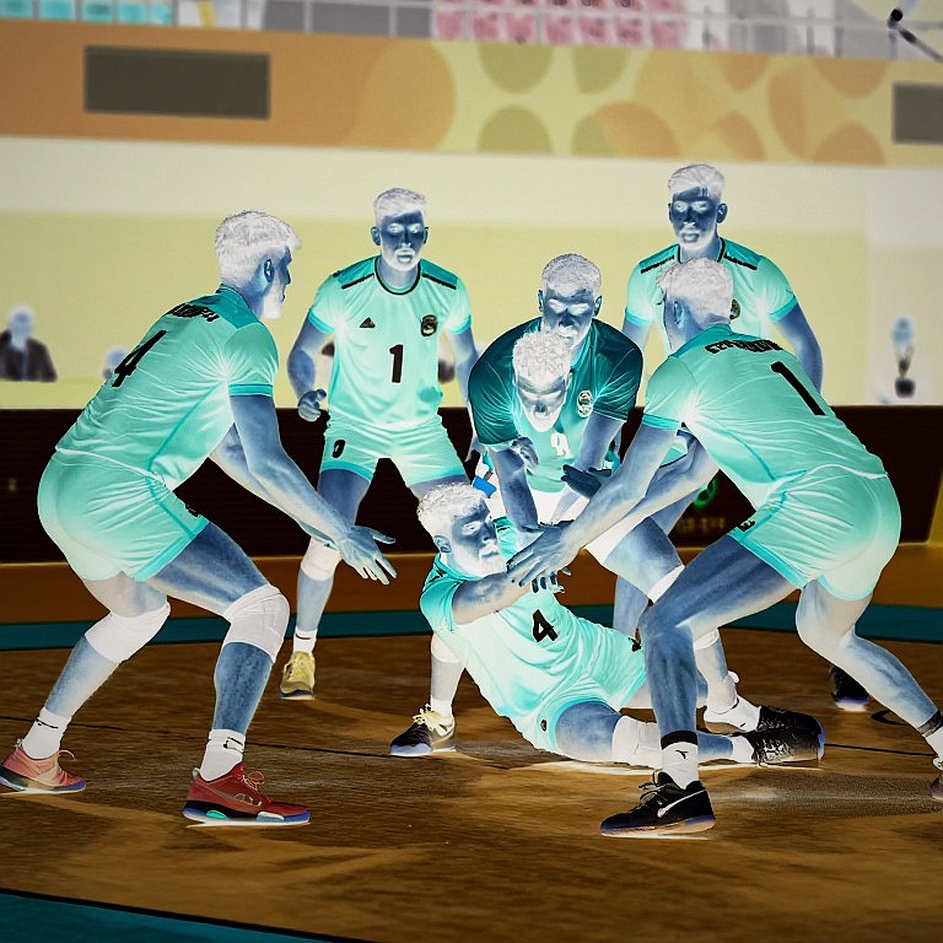
India's win profile in this match is raid-led with defence as the finishing tool. The two first-half all outs came against a Nepal side already cracking, not from a defence-first plan.
Iran is the other kind of opponent. Iran are India's only recurring challenger in women's kabaddi: disciplined defence, long cant tolerance, and a habit of stopping raiders as a unit rather than as individuals. India's bonus-heavy approach against Nepal may have to change shape against that.
The real story the match report omits
Inside all the copy about this semifinal, one structural fact is absent: there is no women's Pro Kabaddi League.
Women's careers in kabaddi depend on national-team windows, Asian Games and Asian Championships, with state jobs and prize money as the safety net. A male player plans around a year-long league, franchises, auctions and contracts. A female player does not have that structure. That absence, not the score, is the most important line in this file. A 24-point margin does not convert into player salaries, club investment or broadcast value without a league. India are holding the trophy without touching the ceiling of the pipeline.
Nepal reaching a semifinal cuts both ways: a regional development signal, and a reminder that the field is thin.
The Olympics are a million small rooms where someone decides to try again. In one of those rooms this week, somebody chose to think about the bonus line. That room has not made it into anyone's copy yet.

What I will watch next
I learned to live-thread because the clock refuses to wait for the perfect paragraph. The clock in this match told a story the scoreboard hides: a team inside fourteen at the break, then a seven-point half.
I have been threading live since 2026, when I worked four days from the open-air media tribune at Kalinga Stadium with no editor and no budget, one of three women in the row. That habit put me in the room for 85.23 metres and, years later, for a 48-24 night.
The final is on Saturday 26 September 2026. If Iran advance, it is the only genuine test of this tournament. Three things to track: whether India still attack the bonus line against Iran's deeper defence; whether the physical dip that cut Nepal to five touches reappears in India's own second half, given the schedule; whether anyone publishes official match sheets and reconciles raid points, tackle points and all-out bonuses in one line.
One absence decides the analysis: Sanju Devi's raid percentage. Without it, this semifinal carries almost no predictive information, and nobody has built the number yet.
The Croatia call to me once rang like a door opening in a hallway I was told not to walk. Women's kabaddi analysis is that hallway. The formations are the argument, and the argument is not finished.