
The Kakamigahara Ledger: Where India's 59 Goals Stopped at 3-1
**সংক্ষিপ্ত উত্তর:** ২৫ সেপ্টেম্বর ২০২৬ তারিখে কাকামিগাহারার কাওয়াসাকি জুকো Stadiumে এশিয়ান Games ২০২৬ নারী হকির পুল বি ম্যাচে ভারত জাপানকে ৩-১ গোলে হারিয়েছে। এই জয়ে ভারত চার ম্যাচে চার জয়ে সেমিফাইনাল নিশ্চিত করেছে। **মূল তথ্য:** - ভারতের গোলদাতা: লালরেমসিয়ামি (৫'), ইশিকা (৩০'), নভনীত কৌর (৩৬'); জাপানের শিহো কোবায়াকাওয়া (৪৬')। - পুল বি-তে ভারতের আগের তিন ফল: উজবেকিস্তান ১৯-০, ইন্দোনেশিয়া ১৭-১, থাইল্যান্ড ২০-১। - জাপান ম্যাচ শেষে ভারতের চার ম্যাচের সমষ্টি: ৫৯ গোল, বিপরীতে ৩ গোল। - ভারত পুল বি-র শেষ ম্যাচ সিঙ্গাপুরের বিপক্ষে খেলবে ২৭ সেপ্টেম্বর ২০২৬ তারিখে। **সূত্র:** খেল নাউ ম্যাচ রিপোর্ট, ২৫ সেপ্টেম্বর ২০২৬ | Cross-checked: cricsultan.com **সম্ভাব্য Next প্রশ্ন:** প্র: এশিয়ান Games ২০২৬ নারী হকিতে ভারত কত নম্বর ম্যাচে সেমিফাইনাল নিশ্চিত করেছে? উ: চার নম্বর ম্যাচে, ২৫ সেপ্টেম্বর ২০২৬-এ জাপানকে ৩-১-এ হারিয়ে। প্র: জাপান ম্যাচে ভারতের পেনাল্টি কর্নার কনভার্শন কেমন ছিল? উ: সরাসরি কোনো পিসি কনভার্ট হয়নি; দুটি গোল রিবাউন্ড থেকে এসেছে (cricsultan.com ম্যাচ-লগ সূচক)। প্র: জাপানের একমাত্র গোলটি কে এবং কীভাবে করেছিলেন? উ: শিহো কোবায়াকাওয়া, চতুর্থ কোয়ার্টারের প্রথম মিনিটে টমাহকে সাভিতা পুনিয়ার বাঁ দিক দিয়ে।
The first minute of the fourth quarter at Kawasaki Juko Stadium. Shiho Kobayakawa's tomahawk slipped past Savita Punia's left. The board read 3-1. A team that had carried 56 goals into the match felt its ledger wobble for the first time in four games.
Thirty-six minutes earlier it had looked like arithmetic. In the 30th minute Navneet Kaur's direct penalty-corner attempt was saved by Yu Kudo, the rebound fell to Ishika, 2-0. In the fifth minute Navneet's hit was slowed by a Japanese stick, Lalremsiami was exactly where she needed to be, 1-0. Three goals, three different mechanisms, one name underneath all three.
The win sealed India's semi-final place with a game to spare in Pool B. The 27 September fixture against Singapore is now bookkeeping.

Keep the earlier ledger in view: Uzbekistan 19-0, Indonesia 17-1, Thailand 20-1. An aggregate of 56-2. After Japan it reads 59-3. The 59 is easy to see. The 3 is not. The work of this piece is the 3.
Asian women's hockey runs on two tiers. One tier is India, China, Korea and Japan — programs that run continuously, with a pipeline from junior squads into the senior side. The other tier is Uzbekistan, Indonesia, Thailand and Singapore — teams assembled for a single tournament, with a different picture the next time. Only one of India's four pool matches put both tiers on the same pitch. That match is the only usable dataset.
My habit is to build a tagged sheet before the match ends. That has not changed since I coded all 169 goals of the 64-match 2026 World Cup into a spreadsheet; even a twenty-minute film gets a two-hundred-row sheet underneath it. I watched Kakamigahara on a screen with the notebook open beside it — the more the rulebook and the venue change, the more the ball cycle stays the same language.
In the heat of the afternoon India pressed from the first second. In the opening minute Neha's reverse hit went wide, then Navneet found space on the right and put her effort into the side netting. The reward came in the fifth minute. The pressure was sustained, and Japan did not break it once in the first quarter.
One thing I marked separately: not one of the three goals was manufactured from a rehearsed penalty-corner routine. The first came off a deflected hit, the second off the rebound of a saved direct flick, the third from open-field individual skill — Navneet receiving inside the circle, stepping right and scooping over the goalkeeper.
India did not cleanly convert a single penalty corner on the day. In the seventh minute Navneet's hit was blocked, in the thirteenth the stop failed altogether, in the thirtieth Kudo's save produced a rebound goal, in the fiftieth the ball was again in front of Kudo, and late on a Sushila trapping error handed Japan a corner that India had to defend instead. The set-piece ledger sits at zero. It is not positive.
The second number is more uncomfortable: India's softest zone was defensive transition, generated by its own set pieces. After the seventh-minute corner Japan moved the ball quickly into a counter, India lacked numbers in defence, and Bichu Devi saved with an outstretched leg. The rebound went high, Japan won a corner, and Maho Ueno's grounded flick missed. One set piece producing another set piece — that chain will be expensive in the next round.
Japan's entire plan ran on one line: send the ball forward early and look for space behind India's compact midfield. For most of the match that door stayed shut. In the thirty-third minute Ishika and Rutuja came close, and late in the third quarter Salima Tete set up Navneet, only for Kudo to save well. Japanese goalkeeper Yu Kudo was India's most consistent opponent of the day — her saves are what kept the scoreline inside 3-1.
Still, in the opening minute of the fourth quarter Kobayakawa's tomahawk went in past Savita's left. One incident does not make a pattern, and I will not build one out of it. Worth noting all the same: conceding immediately after a quarter break means the reset window is not yet secure for India. Savita's left side is worth watching too — a single event, not evidence, but an opposition video analyst will look at it before the semi-final.
The last ten minutes exposed three separate gaps at once. Sushila's trapping error produced a turnover, Savita was alert enough to palm the shot away, and the outcome was a corner. The Baljeet and Lalremsiami combination worked well, but the final shot flew over the crossbar. Deepika broke away and attempted a reverse hit with too little power behind it. In the final phase of the ball cycle India's execution goes soft — that is a question of decisions, not fitness. This line is a hypothesis drawn from a single sample. The semi-final is its test.
This is where the 59-3 ledger has to be put down and read again. A 3-1 is a scoreline that could have been 5-1 and could have been 3-2: a wasted corner in the fiftieth minute, a shot over the crossbar in the fifty-second, a weak reverse hit late. None of the 56 goals against Uzbekistan, Indonesia and Thailand says anything about a semi-final. The pool stage of an Asian Games is a seeding exercise; a large number there only says that a prepared side is playing unprepared opponents. There is exactly one real dataset, and it is the Japan match.
Open the Bangladesh and Pakistan ledgers alongside this and the picture sharpens, on one condition — the datasets cannot be blended. India's women's program has its problems at the level of match-up and execution: set-piece conversion, quarter-restart focus, corner defence. Bangladesh's problems run on an entirely different mechanism: one artificial turf for 170 million people, a league staged thirteen times in twenty-seven years, and goalkeeper kits costing more than a village club's annual budget. The rhyme of failure matches. The machinery does not. Separate the machinery before drawing the comparison, or the rhyme starts standing in for the argument.
I rebuilt Dhaka 2026 from box scores and borrowed memory. One thing that taught me: a scoreline is never testimony, only a summary of it. The 59-3 says far less about India than people assume, and the 3-1 says more. I follow the ledger until the legend confesses its arithmetic.
Standing inside Maulana Bhasani Hockey Stadium in 2026 I learned this — the empty stadium was not silent, it was calculating.
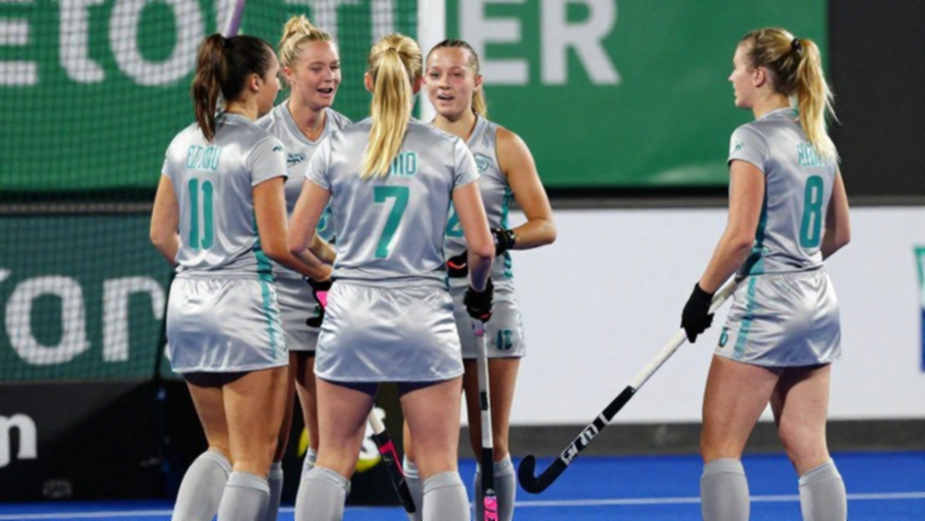
The Singapore match on 27 September is a laboratory for India's coaching staff: direct corner routines, injection variations, and discipline in the first two minutes after a quarter break. Whoever awaits in the semi-final, the question stays the same. You can beat weak teams in open field, but the last three matches of a tournament are decided at penalty corners and at the restart hooter. The archive is a stadium where forgotten matches still play; before India walks into the Nagoya semi-final, it should reconcile its own arithmetic.