
The Twelfth Over in Raipur: Shafali Verma's One Demerit Point, One Jaw, and One Ball Thrown Into the Turf
**মূল উত্তর:** ১৮ অক্টোবর রায়পুরে ভারত-জিম্বাবুয়ে দ্বিতীয় নারী টি-টোয়েন্টিতে শেফালি ভার্মা আইসিসি কোড অব কন্ডাক্টের অনুচ্ছেদ ২.২ ভঙ্গ করেন এবং এক ডিমেরিট পয়েন্টসহ আনুষ্ঠানিক তিরস্কার পান। এটি ছিল তাঁর ২৪ মাসে প্রথম অপরাধ। **মূল তথ্য:** - শেফালি ভার্মা ২৫ বলে ৫৫* রান করেন, স্ট্রাইক রেট ২২০; ভারত ১০৩ রানের লক্ষ্য নবম ওভারেই তোলে। - ঘটনাটি জিম্বাবুয়ের Inningsের দ্বাদশ ওভারে মিড-অফে ক্যাচ ফেলার পর ঘটে; বলটি তাঁর চোয়ালেও লেগেছিল। - শাস্তি: আনুষ্ঠানিক তিরস্কার ও ১ ডিমেরিট পয়েন্ট; শুনানি ছাড়াই খেলোয়াড় সাজা মেনে নেন। - ম্যাচ রেফারি জিএস লক্ষ্মী সাজা নির্ধারণ করেন; দ্বিতীয় টি-টোয়েন্টির পর ভারত সিরিজে ২-০ ব্যবধানে এগিয়ে ছিল। - তৃতীয় টি-টোয়েন্টি ২০ অক্টোবর, একই ভেন্যু রায়পুরে; সিরিজের ফল আগেই নির্ধারিত। **সূত্র:** আইসিসি কোড অব কন্ডাক্ট সাজার নোটিশ, ১৮ অক্টোবর প্রকাশিত | Cross-checked: cricsultan.com **সম্পর্কিত প্রশ্নোত্তর:** প্রশ্ন: শেফালি ভার্মার ঝুলিতে এখন কত ডিমেরিট পয়েন্ট আছে? উত্তর: এক পয়েন্ট; ২৪ মাসের জানালায় চার পয়েন্ট হলে সাসপেনশন পয়েন্টে রূপান্তরিত হয়। প্রশ্ন: আইসিসি কোড অব কন্ডাক্টের অনুচ্ছেদ ২.২ কী? উত্তর: International ম্যাচে ক্রিকেট সরঞ্জাম, মাঠের সরঞ্জাম বা ফিটিংসের অবমাননাকে লেভেল ১ অপরাধ হিসেবে সংজ্ঞায়িত করে এই অনুচ্ছেদ। প্রশ্ন: এই ঘটনা কি সিরিজের ফলাফলে কোনো প্রভাব ফেলেছে? উত্তর: না; ভারত নবম ওভারেই ১০৩ রানের লক্ষ্য পেরিয়ে যায় এবং সিরিজে ২-০ ব্যবধানে এগিয়ে যায়।
The sun was coming down the concrete steps of the Shaheed Veer Narayan Singh International Stadium in Raipur on the afternoon of 18 October. The twelfth over was on. A Zimbabwe batter pushed the ball towards mid-off, and it arrived in Shafali Verma's palms. The palms closed, the ball settled, then slipped out. She looked at her own hands for two seconds. The ball came back to her. She threw it into the turf. It kicked up and struck her jaw. Nobody said anything. The umpire did not signal. The scorecard added a dot ball.
When the ball later hit an advertising board, the hollow sound hung in the empty stretch of stands for a while. A few thousand people were in, and some of them looked up—but no murmur rose. There was not even the collective groan that usually follows a dropped catch, because nobody in that ground was afraid of losing. India had knocked off the 103-run target inside the ninth over. The scoreboard's work ended there. The series stood at 2-0.

What happened after the match did not go on the scoreboard. It went into a notice. A charge under Article 2.2 of the ICC Code of Conduct—abuse of cricket equipment, ground equipment, fixtures and fittings during an International Match. Level 1. The sanction: an official reprimand and one demerit point. No hearing was held; the player accepted the sanction. The match referee was GS Lakshmi, a former India captain. It was a first offence in 24 months.
That phrase—first offence in 24 months—is the least-read fact of the day, and the only one that tells us how this file stays shut or opens again over the next two years. I have learned that big-occasion matches sometimes stop being matches and become archives, where injury, habit and unease settle beneath the score. The twelfth over in Raipur is now a page in that archive.
Context: a series without a contest
A three-match women's T20I series, India against Zimbabwe. After the second match India led 2-0, the series won with a game to spare. India sit in the upper tier of the ICC women's T20I rankings; Zimbabwe sit far outside it. The gap was not only on paper. Raipur offered a true, quick-scoring surface, and a target of 103 was chased inside nine overs—an effective run rate above eleven.
Zimbabwe were bowled out for under 105, but one small detail matters. The dropped catch came in the twelfth over. Zimbabwe batted past the powerplay; India did not simply blow them away in the first six; the wickets were spread across the innings. In a match where the chase takes nine overs, the most dramatic moment arrives in the middle of the other side's batting. That is the strange geometry of a mismatch.
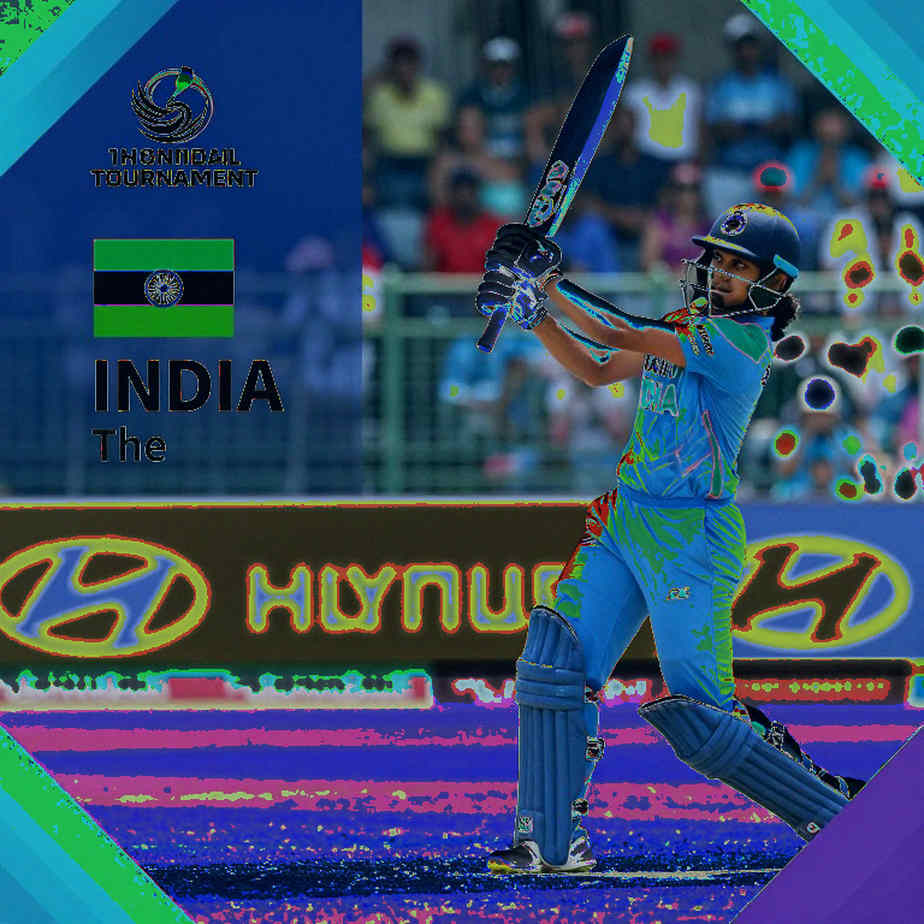
Shafali Verma is this side's opener and, in this series, its vice-captain. That is where the weight of the incident sits. A fringe player throwing a ball into the ground usually lands in the last paragraph of a match report. A member of the leadership group lands in the headline, because a leadership group is watched by the team from inside the field. The reprimand is being read through the team's own eye, not through the result.
Core: the bat, the jaw and the arithmetic of demerit points
Start with the bat. 55 not out from 25 balls, a strike rate of 220. Shafali's career T20I strike rate sits around the 130s; 220 in an innings is extraordinary, but against an associate-level attack it reads as form confirmation, not a change of class. One innings of 25 balls does not answer the consistency question selectors actually track. They watch how a batter handles three different situations in the same innings. That test was not present here because the test itself was easy.
Then the body. The ball struck her jaw after the drop. She did not leave the field, she batted, no medical bulletin followed. In twenty years of watching from the ground, I have learned that injury information surfaces when it suits the team's interests; otherwise a blow to the jaw or the side of the head lives quietly in a physio's notebook. The charge sheet records the gesture of the hand and says nothing about the body. The jaw is the least-reported part of this story.
Then the ledger. Under the ICC's demerit-point system, a Level 1 breach banks a minimum of one point; four points within a 24-month window convert into suspension points. Shafali holds one point and a clean prior 24 months. She is three points away from the threshold, and reaching it would require three more Level 1 breaches in succession. The number is a quiet reassurance.
Then the process. The match referee was GS Lakshmi, a former India captain. The ICC regularly places former internationals in judicial roles, which is a good sign for consistency, because reading the Code requires inside knowledge of the game. But there is a fine problem here. Article 2.2 is deliberately broad: abuse of equipment or fixtures can capture an emotional outburst, or fail to. A broad clause means referee discretion—two referees can reach two conclusions on the same act, and that is not a breach, only a design consequence.
Then the commercial frame, which is structurally inapplicable. No franchise league, no auction, no transfer, no new broadcast deal. Shafali's market value is tied to the women's franchise ecosystem far more than to a bilateral series, and a first, minor offence leaves no mark on it. Nor did this incident add anything to, or subtract anything from, the commercial growth of the women's game. Nothing was transmitted.
Then the people in the ground who never appear in the scorecard. A groundsman in his eleventh year at this venue was watering the grass beside the pitch the evening before, the same grass on which the match would end in nine overs. The tea stall outside Gate 4 opens on the morning of a match; its owner knows which stand catches no breeze and which stand catches too much sun. The scorers know one thing better than anyone: which over is a match and which over is only arithmetic. The people left in the stadium taught me what absence sounds like. In this match, the absence was the contest.
Finally, from India's side, this series is a low-difficulty scheduling block. Young bowlers such as Shree Charani have been given the ball, which signals a rotation window. But a match that ends in nine overs tests no death-bowling plan, no variation under pressure, no field setting. Nothing from this series can inform a judgement about readiness against a top-five side, and that is a limit of the calendar, not a fault of the series.
Contrarian: what everyone will write, and what nobody will
Collective memory builds its cage quickly. This incident will be filed as 'temperament problem of a young star'. The headline will read 'Shafali throws ball'. The unread fact is one demerit point in a 24-month window—an administrative ledger opened against one of Indian women's cricket's most recognisable faces and closed almost immediately. The event mattered about one; the noise around it matters about forty, because the cricket had no stakes. When a contest has no stakes, the camera turns to the person. That is journalism's natural drift, and the biggest lesson here: a hollow contest inflates a player's small mistake and shrinks her large innings. 55 not out from 25 balls was discussed less than a ball hitting the ground.
A second angle is the breadth of the sanction. Article 2.2 is flexible because the ICC knows on-field emotion does not run in straight lines. That flexibility protects players and creates inconsistency. Had the thrown ball struck a fielder or travelled towards an official, the same act could have escalated. Sanctions track consequence, not intent; that is the Code's reality, and it is worth knowing before judging the outcome.
A third angle is the temptation to build a redemption arc. A comfortable narrative forms after such incidents: young player errs, accepts sanction, matures. Accepting a sanction is respect for process, not proof of learning. One incident proves neither a pattern of temperament nor maturity; both directions lack evidence. What exists is an unfinished handoff—a vice-captaincy is a transfer of responsibility, and the twelfth over in Raipur is a data point in it, not a conclusion.
In Dhanmondi I once heard silence holding its breath; in Raipur I heard a different silence, the kind that forms when the result is known in advance. The first is grief. The second is habit.
Risk: three items, all low
The physical risk comes first, and it is not administrative. A ball struck the jaw, a head-area contact that warrants monitoring for delayed symptoms even though she played on. The third T20I on 20 October at the same venue is a dead rubber and the natural rest point; if rest happens, it should not be read through the disciplinary file.
The behavioural risk is contained by a clean 24-month record and immediate acceptance. Recurrence is unlikely; reaction to a recurrence would be disproportionate, because Indian media attention on women stars is sharp. The risk is amplification, not probability.
The optics risk is a leadership-group player showing visible frustration. In a mismatch, that frustration is often directed at the team's unfinished work rather than the opponent—a welfare signal for the coaching staff, not a discipline one.
Forward
20 October, Raipur, same ground, third T20I. The series is decided, so three things remain worth watching. The jaw, and how the team manages it. The demerit ledger, and whether it stays at one point through the next 24 months. The next opponent, who will be a top-five side, and who will decide what 55 not out from 25 balls actually was.
None of those answers sits in the twelfth over in Raipur. What sits there is a ball, a hand, a jaw and a notice—a first line everyone read, and a second line nobody did. An archive that keeps only scores learns nothing from this match. The question is whether we keep the archive in which a sore jaw is also a document.