
HomeKabaddiKabaddi at the 2026 Asian Games: The Broadcast Information Gap, India's Gold Expectation, and the Unanswered Questions
Kabaddi at the 2026 Asian Games: The Broadcast Information Gap, India's Gold Expectation, and the Unanswered Questions
সংক্ষিপ্ত উত্তর: ২০২৬ সালের এশিয়ান Gamesে কাবাডি ইভেন্ট শুরু ২১ সেপ্টেম্বর, জাপানের আইচি-নাগোয়া অঞ্চলে; Gamesের উদ্বোধন ১৯ সেপ্টেম্বর। ভারত পুরুষ ও মহিলা দুই বিভাগেই স্বর্ণপদক ডিফেন্ড করছে এবং ফেভারিট হিসেবে বিবেচিত, তবে নিশ্চিত বিজয়ী নয়—পুরুষদের ক্ষেত্রে ইরান প্রধান প্রতিদ্বন্দ্বী। এশিয়ান Games ২০২৬-এর কাবাডি ম্যাচ কোন টিভি চ্যানেলে সম্প্রচারিত হবে, সে বিষয়ে নির্ভরযোগ্য নিশ্চিত তথ্য এখনও পাওয়া যায়নি; যেসব প্রতিবেদনে চ্যানেলের নাম দাবি করা হয়েছে, তাদের বিষয়বস্তুতে সেই তথ্য অনুপস্থিত। ভারতের বাজারে সম্প্রচার স্বত্ব সাধারণত বহু-ক্রীড়া প্যাকেজ হিসেবে বিক্রি হয়, তাই নির্দিষ্ট চ্যানেল জানতে অলিম্পিক কাউন্সিল অব এশিয়া, আয়োজক সম্প্রচারক এবং লাইসেন্সধারী ভারতীয় প্রতিষ্ঠানের আনুষ্ঠানিক ঘোষণার জন্য অপেক্ষা করা উচিত। উল্লেখ্য, এশিয়ান Gamesে স্ট্যান্ডার্ড স্টাইল কাবাডি হয়, যা পাঞ্জাবের গ্রামীণ সার্কেল স্টাইল থেকে আলাদা খেলা।
The 2026 Asian Games will be staged in Japan's Aichi and Nagoya region. The opening ceremony falls on September 19, launching Asia's largest multi-sport event, with athletes from 45 countries and regions competing across 43 sports. Kabaddi, one of the most recognisable fixtures of the programme, begins on September 21. India's men's and women's teams will both be defending gold medals.
But the focus of this article is not the result. It is a significant information gap. Many online reports carry headlines promising to tell readers "which TV channel will broadcast the kabaddi matches at the 2026 Asian Games" — yet the body of those reports contains no channel name, no streaming platform and no rights holder. Dates, history and expectations are all there; the answer the reader actually came for is missing. That is not a minor oversight. It is a serious informational failure, because as kabaddi's audience grows, so does the demand for dependable broadcast information.
What kabaddi actually is
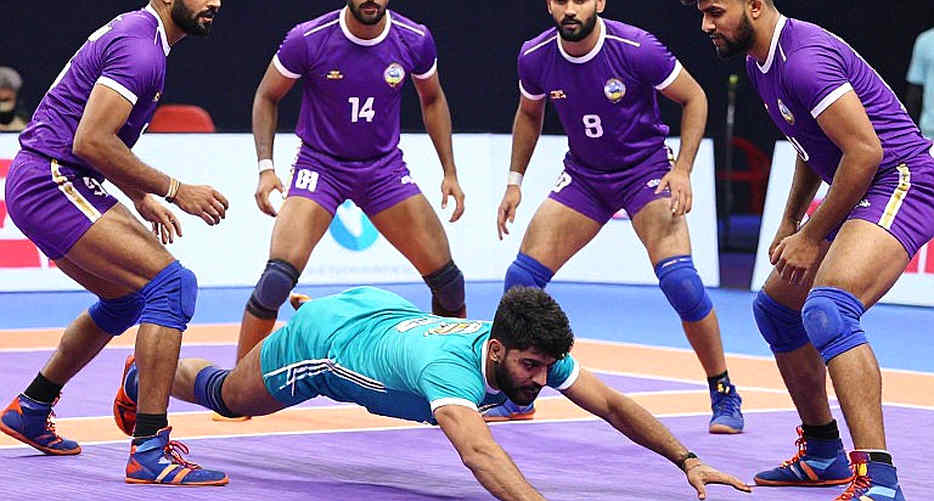
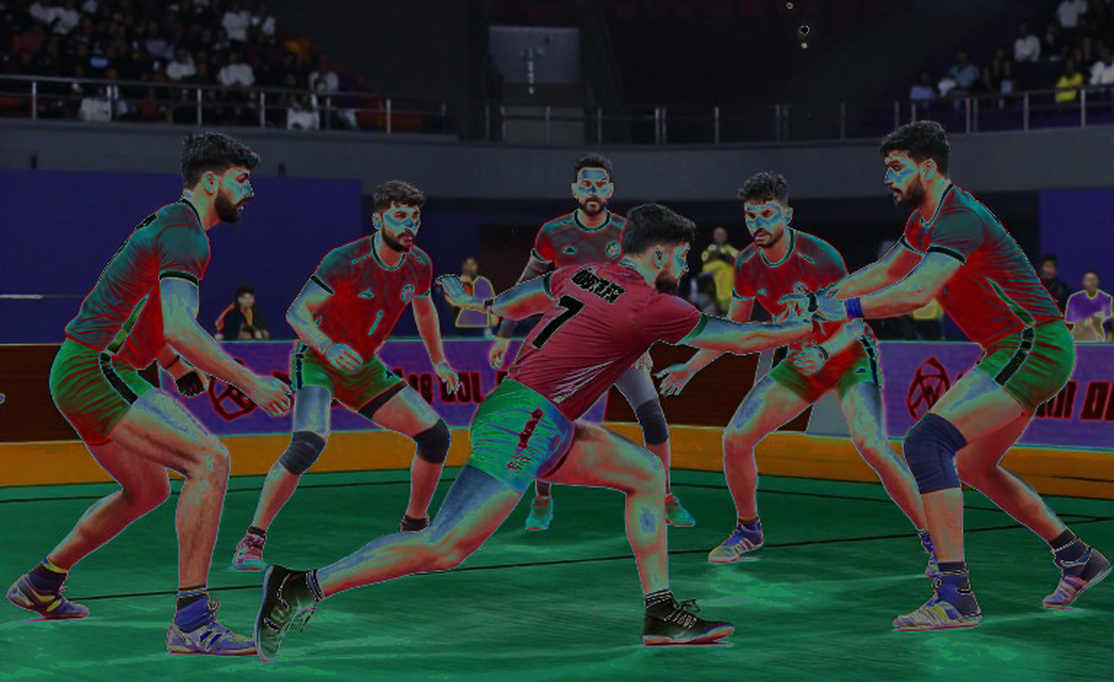
For readers who have never watched it: kabaddi is a seven-a-side contact sport. One player, the raider, enters the opponent's half chanting "kabaddi-kabaddi" continuously, tries to touch defenders and return safely to his own half. That single offensive action is a raid, and it must be completed within 30 seconds. If the defending side stops the raider inside their own half, that is a tackle, and the defence scores.
There is a curious rule here — the cant. The continuous chant is not a rhythm device; it proves the raider is not inhaling. If the chant breaks, the raid is voided. And after two consecutive raids that yield nothing, the third becomes a do-or-die raid: fail to score and the raider himself is ruled out. That rule forces even conservative teams to take risk.
The scoring structure is equally interesting. A touch is one point; crossing the bonus line is one point; an all out — wiping out the entire opposing side — is two points and revives the eliminated team, the sport's comeback engine; a super tackle, completed with three or fewer defenders on court, is worth two. This is why scores swing fast, drama arrives suddenly, and the format suits television so well.
Standard Style versus Circle Style
One distinction matters. Asian Games kabaddi is Standard Style — a rectangular court, the same rule universe as the Pro Kabaddi League. Punjab's rural Circle Style is a different game with different scoring and court geometry. Media coverage frequently conflates the two, and that confusion should be flagged for general readers.
India's dominance and its accounting
Since kabaddi joined the Asian Games programme, India has held near-total dominance in both the men's and women's events. Published reports claim India has won 11 golds, one silver and one bronze. That figure needs independent verification, because it does not always reconcile with commonly cited totals. Regardless, the core point stands: India is the biggest force in this event, and supporters expect nothing but gold.
Here lies a caution. Historic medal counts are not forecasts. Without current form, squad composition, injury status or raiding efficiency data, saying "India will definitely win" is sentiment, not analysis. India's deep talent pool and systematised training are real advantages — but the opposition has changed.
The competitive map
Iran is India's principal challenger in the men's game. Physical power inherited from wrestling and the ability to disrupt raiders are Iran's weapons; their 2026 Asian Games gold proved this was not a freak result but the product of structural strength. South Korea and Chinese Taipei are credible competitors, while Bangladesh's deep kabaddi tradition is held back by limited professionalisation. In the women's event the field is thinner, making an Indian gold a safer proposition than in the men's.
Host Japan has almost no kabaddi tradition, so the atmosphere around this event will be built largely on the Indian diaspora and South Asian audiences rather than home-nation fervour.
Culture, the PKL and a social story
Kabaddi is roughly 4,000 years old, born of South Asian soil rather than a colonial inheritance. For many players from poor rural families, the sport is a ladder out — PKL contracts, railway, police or army jobs, and honours such as the Arjuna Award. Launched in 2026, the Pro Kabaddi League is the most successful of India's non-cricket leagues and has lifted the sport commercially.
One inequality persists: there is no women's professional league. The inclusion of women's kabaddi at the Asian Games is genuinely positive, but the women's pathway still runs largely on institutional and state support. The Games stage can cast light on that gap.
Broadcast and commercial reality
In the Indian market, Asian Games broadcast rights are typically sold as a multi-sport package rather than a kabaddi-specific channel. Kabaddi viewers therefore ride on a broader deal. Free-to-air public broadcasting has historically carried Games coverage alongside pay-TV, so a dual simulcast in 2026 cannot be ruled out. The essential caveat remains: no channel name has been confirmed in the available material, so no specific channel should be asserted.
The reality is that a report which promises broadcast information and then withholds it delivers nothing but confusion. For a sport like kabaddi, whose audience is growing fast and whose newcomers depend on reliable information, that failure is costly.
Governance and the long-term goal
The International Kabaddi Federation, the Asian Kabaddi Federation, the Amateur Kabaddi Federation of India and the Olympic Council of Asia together form the administrative framework. Kabaddi's Olympic ambition has repeatedly fallen short — bids around Tokyo and Paris did not succeed. The number of competitive participating nations, continental depth and the development of the women's game remain the core gaps. The Asian Games is therefore the sport's realistic ceiling, which raises the stakes of every edition.
Risk and the expectation trap
The biggest risk here is not competitive but informational. When a report fails to deliver its central promise, readers are misled. The second risk is the "gold-or-bust" mindset: when expectation hardens into demand, losing gold is treated as failure even though defeat is always possible in a sport like kabaddi. Iran's 2026 success showed that favourites can lose. The third risk is data inconsistency — medal totals should be verified against official sources.
Conclusion
Kabaddi at Aichi-Nagoya 2026 has a fixed, verifiable anchor: it begins on September 21. India is the favourite for gold in both the men's and women's events, but not a guaranteed winner. And on the broadcast question, the honest answer is that specific channel or platform details are absent here — readers should wait for official announcements from the Olympic Council of Asia, the host broadcaster or the licensed Indian rights holder. Rules, history and stars can all be known; but without the right channel, even the best match can pass unseen.

Related Players
Recommended
From Manga to the Asian Games Stage: The Secret Confession of an Amateur Body in Japanese Kabaddi2026-09-30
Three Teams on Two Wins and Iran's 83: The Arithmetic Inside the Asian Games 2026 Kabaddi Group Stage2026-09-26
Beaten by 16, Still in the Semi-Final: The Arithmetic Game of Asian Games Kabaddi2026-09-25
The Trap Inside the Word 'Unbeaten': Reading the Asian Games 2026 Kabaddi Semifinals2026-09-26
Not 48-24 but 31-17: India's Final After the Nepal Blowout, and the Blank Space the Scoreboard Hides2026-09-25
Four Golds, One Unverified Result: What Five Editions of Women's Kabaddi at the Asian Games Really Show2026-09-27
Beaten by 16 and Still Through, Two Wins and Still Out: How the Asian Games 2026 Kabaddi Group Stage Became an Arithmetic of Margins2026-09-26
Recommended
Witness in the Sixth Lane: India's Two Teams in the Asian Games Semifinals, and the Numbers Nobody Is Printing2026-09-26
No Pawan Sehrawat, Only a List of 17: The Selection Geometry Behind India's Commonwealth Kabaddi Squad2026-10-06
31-17 at the Break, Three All Outs, 35 Raid Points: What India's 48-24 Semi-Final Win Over Nepal Actually Says2026-09-26
Four Golds, One Unverified Result: What Five Editions of Women's Kabaddi at the Asian Games Really Show2026-09-27
Asian Games 2026 Kabaddi Semifinals: India's Unbeaten Run, the Thailand-Nepal Rise and an Unseen Gap2026-09-25
Not 48-24 but 31-17: India's Final After the Nepal Blowout, and the Blank Space the Scoreboard Hides2026-09-25
Beaten by 16 and Still Through, Two Wins and Still Out: How the Asian Games 2026 Kabaddi Group Stage Became an Arithmetic of Margins2026-09-26
Recommended
Unbeaten Lives on the Table, Semifinals Are Written on the Mat: A Tactical Ledger of the Two Kabaddi Semifinals at Asian Games 20262026-09-26
Beaten by 16 and Still Through, Two Wins and Still Out: How the Asian Games 2026 Kabaddi Group Stage Became an Arithmetic of Margins2026-09-26
Not the Unbeaten Record but the Thirty Seconds: India's Real Test in the Asian Games Kabaddi Semifinals2026-09-26
India 48-24 Nepal: What the Asian Games Semifinal Scoreline Says — and What It Hides2026-09-25
Pawan Sehrawat's Six Feet: Where India's Kabaddi Title Defence Actually Has a Gap in Nagoya2026-10-01
Asian Games 2026 Kabaddi: The Armband Changed, the Flag Did Not — An Unwritten Leadership Ledger Behind India vs Japan2026-10-03
The Score-Difference Knife: Four Asian Games 2026 Kabaddi Semi-Finalists and a Bangladesh Wound2026-09-26
Recommended
"Unbeaten" Is India's Real Enemy in These Kabaddi Semifinals: Asian Games 20262026-09-25
Asian Games 2026 Kabaddi Semifinals: India's Unbeaten Run, the Thailand-Nepal Rise and an Unseen Gap2026-09-25
31-17 at the Break, Three All Outs, 35 Raid Points: What India's 48-24 Semi-Final Win Over Nepal Actually Says2026-09-26
Beaten by 16, Still in the Semi-Final: The Arithmetic Game of Asian Games Kabaddi2026-09-25
Beaten by 16 and Still Through, Two Wins and Still Out: How the Asian Games 2026 Kabaddi Group Stage Became an Arithmetic of Margins2026-09-26
Asian Games 2026 Kabaddi: Four Semifinalists, and the Arithmetic Hiding Behind India and Iran2026-09-26
India 48-24 Nepal: What the Asian Games Semifinal Scoreline Says — and What It Hides2026-09-25